Bundeswehr Bars Chinese Drones and Cars Over Espionage Risks
Germany’s military is restricting connected Chinese-made equipment as security concerns collide with Europe’s growing reliance on imported technology.
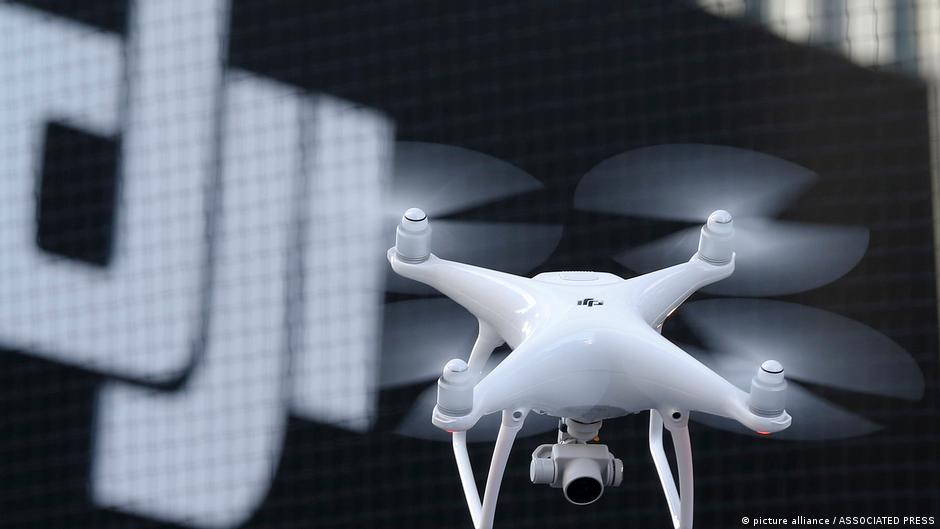
Germany’s armed forces have banned small Chinese-made drones from barracks and military training grounds and prohibited Chinese-brand cars from entering military facilities, according to a Bundeswehr representative cited by Der Spiegel. The measures reflect a widening concern that commercially available, networked equipment can create security vulnerabilities even when it is not designed primarily for military use.
The Bundeswehr ordered an immediate halt to the use of all small Chinese unmanned aerial vehicles at garrisons and training areas. Drones already purchased from Chinese manufacturers, including DJI, must no longer be operated. The Defence Ministry representative said the existing systems would be replaced with German- or European-made products.
The military has also barred vehicles made by BYD, Geely and other Chinese brands from garrisons and other defence sites. Service members who own such cars must leave them outside the protected security zone and walk to their place of duty.
Consumer technology becomes a strategic concern
The restrictions are based on fears that cameras and sensors embedded in Chinese-made equipment could collect classified information and transmit it to Chinese security authorities. In the case of drones, the potential exposure could include images of barracks and training grounds, details of military exercises and information about German weapons systems.
For defence planners, the central issue is no longer simply where a machine was assembled, but what it can observe, store and transmit.
This distinction has broad economic implications. Modern drones and electric vehicles are software-dependent platforms equipped with cameras, microphones, positioning systems and other sensors. Their value comes partly from connectivity and continuous data processing, but those same characteristics complicate traditional procurement assessments. Price, performance and reliability are no longer sufficient criteria when a product operates near sensitive infrastructure.
The Bundeswehr’s response points toward a more security-focused model of public purchasing. Replacing equipment that has already been acquired creates direct costs, while limiting future contracts to German or European suppliers may reduce the pool of eligible vendors. At the same time, such restrictions could provide demand for European manufacturers and strengthen the political case for developing regional supply chains in strategically sensitive technologies.
British case highlights supply-chain exposure
Germany’s decision follows a separate controversy involving Britain’s Royal Navy. On August 9, The Telegraph reported that K3 Scout maritime reconnaissance drones fitted with Chinese-made components had secretly transmitted information to China. The drones, valued at £12 million, were supplied by the British company Kraken Technology Group. Their built-in cameras were produced by a subcontractor that had guaranteed their security.
A source in Britain’s Ministry of Defence said London had proposed using the K3 maritime drones to help ensure freedom of navigation in the Strait of Hormuz. The episode illustrated how security exposure can arise below the level of the main contractor: a platform supplied by a domestic company may still depend on foreign components whose software and data pathways are difficult for the purchaser to verify.
That structure resembles earlier industrial dependencies in which governments discovered that control over a finished product did not necessarily mean control over its critical inputs. In the connected economy, however, the strategic input is not only a physical component. It may also be firmware, remote access, cloud storage or the flow of sensor data generated during ordinary operation.
Germany’s electric-car dilemma
The restrictions on cars are particularly significant because they intersect with Germany’s rapid shift toward electric mobility. Der Spiegel reported in late August, citing experts, that networked electric vehicles from China could become channels for espionage. Their cameras, microphones and sensors can collect large volumes of information about their surroundings and movements. German authorities are conducting an analysis of these risks.
The security review comes as Chinese manufacturers are gaining commercial ground in Europe’s largest automotive market. Driven by the energy crisis and a state subsidy programme favourable to motorists, German demand for electric cars increased by 80% over one year. Chinese producers recorded the strongest sales growth.
This creates a structural tension for German economic policy. Subsidies intended to accelerate electrification can also increase demand for imported vehicles, including models from manufacturers now facing restrictions at sensitive state facilities. The same products that help advance energy and transport objectives may therefore generate new costs for defence, cybersecurity and industrial policy.
The ban does not amount to a general prohibition on Chinese vehicles or drones in Germany. It is targeted at military sites, where the consequences of data collection are considered particularly serious. Nevertheless, the policy establishes a boundary that could influence procurement standards elsewhere. Operators of ports, energy networks, government buildings and other critical infrastructure face similar questions about connected devices operating in restricted environments.
For European industry, the longer-term consequence may be a gradual shift from purchasing technology primarily on cost and capability toward evaluating control over data, components and software throughout the supply chain. Germany’s decision shows how national security considerations can reshape markets: imported equipment may remain commercially attractive, yet become unusable in high-security settings, creating pressure for trusted domestic or European alternatives.