Canada Bars Russian Players From 2027 Juniors Despite Valid Visas
Ottawa’s decision exposes a widening divide between sporting arbitration and states’ control over borders, security and political legitimacy.
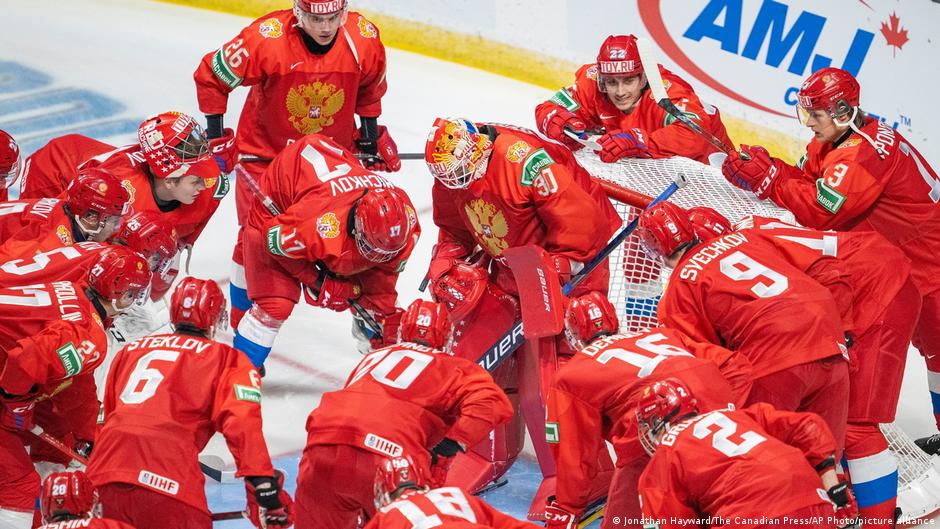
Canada will prevent Russian hockey players and officials from entering the country for the 2027 IIHF World Junior Championship, including individuals who already hold valid visas, Sports Minister Adam van Koeverden said. The decision turns an international sporting dispute into a broader test of how governments use border policy and access to major events as instruments of economic and political pressure.
The Canadian government has formally notified the International Ice Hockey Federation, or IIHF, and Hockey Canada that visas will not be issued to Russian participants, according to a report published by Canadian sports outlet TSN on Wednesday, November 11. The restrictions will also cover Belarusian athletes and officials.
“The minister will take steps to conduct an individual assessment and prevent Russian and Belarusian athletes and officials from entering Canada to participate in competitions, regardless of whether they hold valid visas,” van Koeverden said, according to TSN.
The minister said the measures were not directed against Russian or Belarusian people. Instead, Ottawa aims to prevent the governments of Russia and Belarus from using international competitions hosted in Canada as platforms for state representation, political legitimization and propaganda.
Van Koeverden added that Canada’s established position still allows individual athletes competing under neutral status to take part in international sporting events held in the country. However, the planned exclusion of Russian and Belarusian participants from the junior championship indicates that neutral eligibility granted by a sports body does not automatically translate into admission by a host state.
“Canada’s position remains unchanged: as long as Russia continues its war of aggression against Ukraine, there can be no return to business as usual,” the minister said, adding that Canada would continue supporting Ukraine.
Arbitration Meets Sovereign Border Control
The announcement follows an October 30 ruling by the Court of Arbitration for Sport, or CAS, requiring the IIHF to readmit Russian national teams to international tournaments beginning in 2027, despite Russia’s continuing full-scale war against Ukraine. The first competition expected to fall under that ruling is the World Junior Championship in Canada, scheduled for December 26 through January 5 in Edmonton and Red Deer.
The legal tension is structural. CAS can determine whether a sporting federation has applied its own rules properly, but it cannot compel a national government to issue visas or admit foreign nationals. Canada’s response therefore demonstrates the practical limits of sports arbitration when tournament access depends on immigration decisions, security planning and host-country cooperation.
The IIHF expressed disagreement with the CAS ruling and identified visa access, security, logistics and the difficulty of changing the competition format at short notice as major problems. Those concerns carry direct economic consequences. International tournaments rely on predictable schedules, travel arrangements, insurance, venue security, broadcasting plans and commercial commitments. Uncertainty over whether a team can enter the host country raises costs across that chain, even before a final roster arrives.
Prime Minister Mark Carney had already said on November 4 that Russian hockey players would not receive visas to participate in the 2027 championship. Van Koeverden’s subsequent statement goes further by making clear that possession of an existing valid visa would not guarantee entry.
Costs Extend Beyond the Excluded Team
The dispute is already affecting another national program. On November 8, the Norwegian Ice Hockey Federation, or NIHF, said Russia had been placed tenth under the championship’s revised structure following the CAS decision. Norway, as the lowest-ranked team, would consequently be relegated to Division 1A.
That illustrates how reinstating one team redistributes scarce places and resources throughout the competition. Relegation can alter a federation’s sporting calendar, travel requirements, exposure and planning, while organizers must revise group structures and operational assumptions. If Russia is included in the formal draw but then denied entry to Canada, the system could face another round of changes.
According to a draft championship schedule circulated by the IIHF, Russia was due to compete in Group B against Canada, the Czech Republic, Switzerland and Latvia. Canada’s entry ban places those proposed fixtures in doubt and could force the federation to reconcile the CAS order with the host government’s policy.
Sport as a Channel of Economic Statecraft
International sport has historically been presented as separate from diplomacy, yet major competitions depend on public infrastructure, border administration, policing and political consent. The Canadian decision reflects a familiar feature of sanctions-era economics: restrictions do not operate only through trade, finance or ownership. They also limit participation in institutions that create visibility, prestige and commercial value.
Ottawa’s argument centers on political legitimacy rather than an estimate of tournament revenue. Nevertheless, the economic mechanism is clear. Hosting rights give governments leverage because federations, broadcasters, sponsors and teams have already committed resources to a particular jurisdiction. A host state’s refusal to admit participants can override a federation’s competition plan without directly reversing an arbitration ruling.
The longer-term consequence may be greater caution when international bodies award tournaments involving politically contested participants. Federations could place more weight on visa guarantees, contingency formats and the alignment between host-government policy and sporting regulations. For Canada and the IIHF, the 2027 championship is becoming more than a junior hockey event: it is a case study in whether global sports governance can function when legal eligibility, sovereign entry rules and geopolitical sanctions point in different directions.