Dnieper and Kerch Bridge Strikes Raise Ukraine War’s Economic Costs
Attacks on strategic crossings in Kyiv and the Kerch Strait are intensifying pressure on transport networks, public services and wartime logistics.
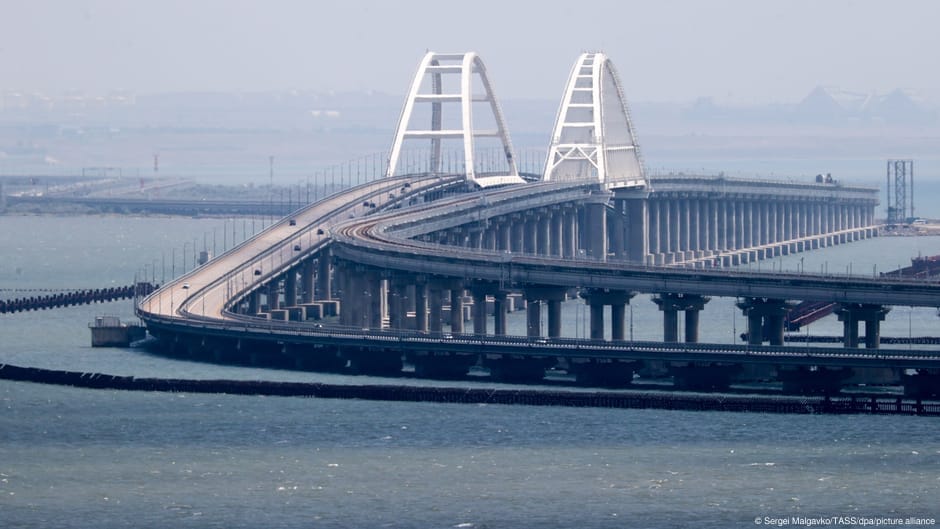
Strategic bridges in Kyiv and the Kerch Strait came under attack overnight on November 17, placing renewed strain on two transport systems that have become central to the economic geography of the war. Russian forces struck Ukraine in another large-scale overnight assault, with Kyiv among the principal targets, while the bridge connecting Russian-annexed Crimea with Russian territory was also attacked.
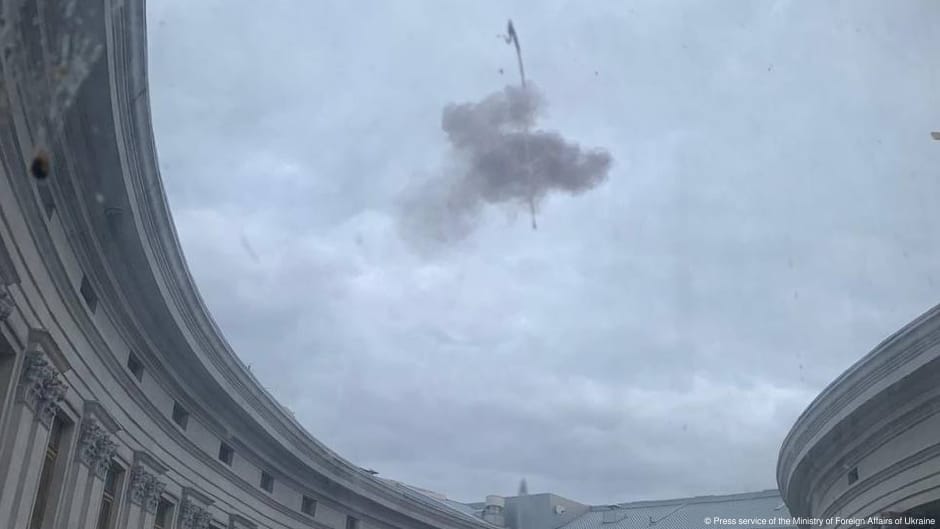
In the Ukrainian capital, the Northern and Southern bridges across the Dnieper were hit, according to a preliminary statement from Kyiv Mayor Vitali Klitschko. Social media users published photographs and videos showing at least one explosion in the vicinity of the Northern Bridge. Local Telegram channels reported interruptions to water and heating supplies in districts on the river’s left bank.
Klitschko confirmed both the reported bridge strikes and utility disruptions only in brief notifications, without providing details about the scale of the damage. Kyiv Metro said on the morning of November 17 that services had stopped on the section of the Green Line that crosses the Dnieper via the Southern Bridge. City authorities temporarily closed traffic on both the Northern and Southern bridges.
Transport chokepoints become economic targets
The immediate consequences extend beyond physical damage. Kyiv is divided by the Dnieper, and its bridges bind together residential districts, workplaces, utilities and public transport. Even temporary closures can force traffic onto fewer crossings, lengthen journeys and complicate the movement of workers, emergency services and goods. Interruptions to water and heating add another layer of economic pressure by affecting households and public facilities as the colder season approaches.
Russian forces have repeatedly attacked transport crossings in Kyiv since the beginning of October 2026. The sustained campaign has prompted municipal and national authorities to consider alternatives for maintaining connections across the river. Ukrainian Restoration, Infrastructure and Transport Minister Mykola Kalashnyk previously said officials were considering pontoon crossings and, over the longer term, construction of a tunnel beneath the Dnieper.
That response illustrates a recurring feature of wartime economics: infrastructure networks designed for efficiency must be redesigned for redundancy. Pontoon crossings may offer a faster contingency option, while a tunnel would represent a much larger and more capital-intensive project. Both approaches reflect the growing premium placed on routes that can continue operating when fixed bridges are damaged or closed.
The economic value of a bridge in wartime lies not only in its carrying capacity, but also in how difficult it is to replace when the network around it is disrupted.
The historical parallel is the repeated targeting of rail junctions, ports and river crossings in major conflicts. Such attacks seek to impose costs beyond the site of impact: repairs consume labor and materials, detours reduce productivity, and uncertainty forces governments and businesses to maintain spare capacity. Over time, the burden can shift investment away from expansion and toward protection, repair and duplication.
Kerch crossing faces renewed disruption
In the Kerch Strait, Sergei Aksyonov, the Moscow-installed head of annexed Crimea, reported an attack on the bridge linking the peninsula to Russia. He said traffic across the Crimean Bridge had been suspended and promised further information, but had issued no update several hours after the attack.
The crossing had also been attacked the previous night, and traffic was closed until the evening of November 16. Telegram channels Astra, Mash and Exilenova+ reported that one of the bridge’s arches had been damaged. That claim had not received official confirmation.
The Crimean Bridge has repeatedly been attacked by Ukrainian forces since Russia launched its full-scale invasion of Ukraine. The first such major incident occurred in October 2022, followed by another in July 2023; both caused serious damage. In June 2025, the Security Service of Ukraine said it had conducted an underwater operation to detonate explosives near the structure’s supports, although no significant consequences from that operation were reported.
Repeated closures matter even when permanent structural damage remains uncertain. A bridge can lose part of its economic utility through precautionary suspensions, inspections and volatile access conditions. For Crimea, the crossing serves both civilian transport and broader logistical functions, making reliability almost as important as nominal capacity.
Taken together, the attacks in Kyiv and the Kerch Strait show how the conflict is increasingly testing the resilience of fixed infrastructure on both sides. The direct repair bill is only one component of the cost. Public-service interruptions, transport delays, emergency engineering and investment in alternative routes create cumulative losses that are harder to measure but potentially more persistent.
The longer such pressure continues, the more transport planning is likely to shift from optimizing speed and cost toward ensuring survivability. That structural change can endure beyond the fighting: tunnels, temporary crossings, duplicated routes and reinforced facilities may reduce vulnerability, but they also require scarce capital that might otherwise have supported housing, commercial development or modernization. In this sense, the contest over bridges is also a contest over future economic capacity.