Drone Alert at UK Airbase Exposes Rising Costs of Strategic Vulnerability
The incident at RAF Lakenheath highlights how low-cost aerial threats can impose widening security and operational costs on military infrastructure.
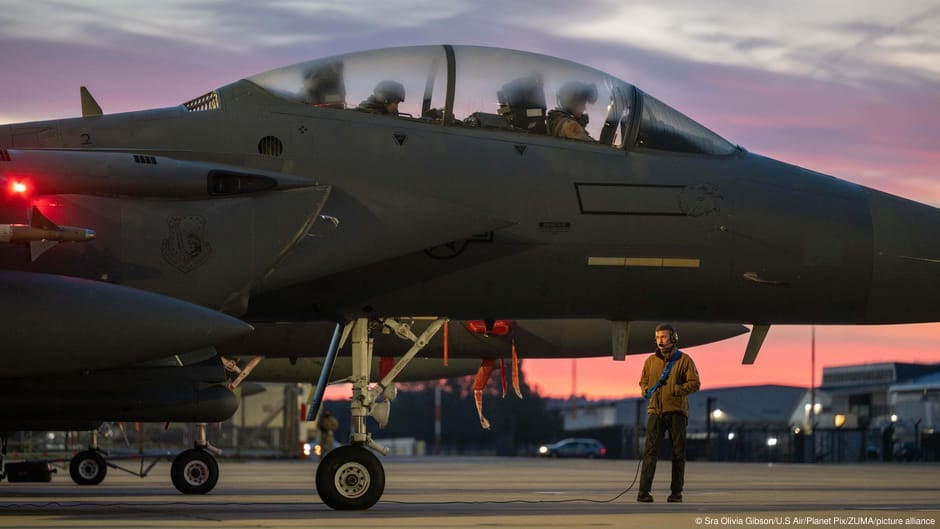
The reported appearance of unauthorized drones over RAF Lakenheath in eastern England has added a new layer of uncertainty to the security environment surrounding Britain’s military infrastructure. The Royal Air Force base hosts United States personnel as well as British forces, making any unexplained aerial activity there more than a localized security concern.
On the evening of Friday, November 13, the US Air Force reported “suspected unauthorized drone activity” at the base. It said no personnel, aircraft or infrastructure had been harmed. US military representatives added that they were continuing to work closely with their British partners to protect American service members and nearby residents.
“Neither personnel, aircraft nor infrastructure were harmed,” the US Air Force said.
Personnel were nevertheless instructed to shelter in place, according to Sky News, which reviewed a copy of the warning distributed at the base. Residents of a neighboring village reported hearing sounds resembling a siren, the BBC said. The Daily Mail also reported that residents near RAF Feltwell, approximately 11 kilometers from Lakenheath, heard an alarm on the same evening.
Asymmetric pressure on expensive assets
The economic significance of such incidents lies in the imbalance between the potentially low cost of operating a drone and the much greater expense of defending a strategic airfield. Even when an incursion causes no physical damage, it can trigger alerts, restrict movement, occupy security personnel and interrupt normal operations. Repeated incidents can require sustained spending on detection systems, electronic countermeasures, surveillance and additional staffing.
This is a familiar pattern in the economics of asymmetric threats: an inexpensive or difficult-to-identify device can force a heavily capitalized institution to adopt costly defensive measures. Airbases concentrate aircraft, fuel, communications equipment and skilled personnel in fixed locations. Their economic and military value makes them sensitive not only to attacks but also to surveillance, disruption and uncertainty about an operator’s intentions.
The Lakenheath alert also comes amid a sequence of events involving other British bases used by US forces. On November 9, the United States withdrew its tanker aircraft from RAF Mildenhall in eastern England. The following day, a senior US military officer was detained in Britain on suspicion of spying for Russia. Local police, however, said the detention was not connected to other counterterrorism investigations.
The Wall Street Journal reported that the aircraft were relocated because of a threat from Iran. One piece of indirect evidence cited in this context was the US Air Force’s removal of B-1 bombers from RAF Fairford in early October. Those aircraft had been used in strikes against Iran.
Security risk and operational geography
Taken together, the developments underscore the economic importance of where military assets are based. Moving aircraft can reduce exposure at one location, but relocation itself carries costs: personnel and support systems must follow, logistics must be reorganized, and alternative facilities may require additional protection. Dispersal can improve resilience while reducing some of the efficiencies created by concentrating equipment and expertise at a small number of hubs.
The pattern also resembles earlier periods in which strategic infrastructure had to be adapted to changing technologies. Large military installations were historically designed around threats from conventional aircraft, missiles or ground infiltration. Small drones complicate that model because they can be hard to detect, may be commercially available and can appear without immediately revealing whether their purpose is observation, harassment or attack.
That ambiguity creates its own cost. Authorities must respond before they know whether an incident is hostile, accidental or benign. If they react too slowly, they risk damage to valuable assets; if they respond to every sighting at maximum intensity, they incur operational disruption and recurring expenditure. The central challenge is therefore not simply acquiring more defenses, but developing systems capable of distinguishing credible threats from background activity quickly enough to avoid unnecessary shutdowns.
Events at RAF Fairford have already heightened scrutiny. In late September, three white vans were found on the base, after which police temporarily detained five suspects. British Prime Minister Andy Burnham said there were “strong indications” that Iran had played a role in those events. Tehran described the allegations as unfounded.
A broader fiscal consequence
For Britain and the United States, protecting shared bases increasingly requires investment across institutional boundaries. Military commands, local police, intelligence agencies and civilian aviation authorities may all hold parts of the relevant information and responsibility. Coordination can reduce duplication, but it also demands compatible technology, clear legal authority and procedures for communicating with surrounding communities.
No damage was reported at Lakenheath, and the available statements did not identify who operated the suspected drones or establish a link to the other incidents. The immediate event therefore remains limited in its confirmed consequences. Its structural importance is broader: relatively small aerial systems can compel advanced militaries to reconsider how they protect fixed assets, allocate security budgets and preserve operational continuity.
If alerts of this kind become more frequent, the cumulative burden may matter more than any single episode. The long-term cost would be measured not only in counter-drone equipment, but also in delayed operations, relocated assets, additional personnel and the opportunity cost of resources diverted from other defense priorities.