Eisenkot Gets Mandate as Israel Faces a High-Stakes Coalition Test
Arab parties hold the balance as Israel’s fragmented parliament confronts renewed elections and mounting economic uncertainty.
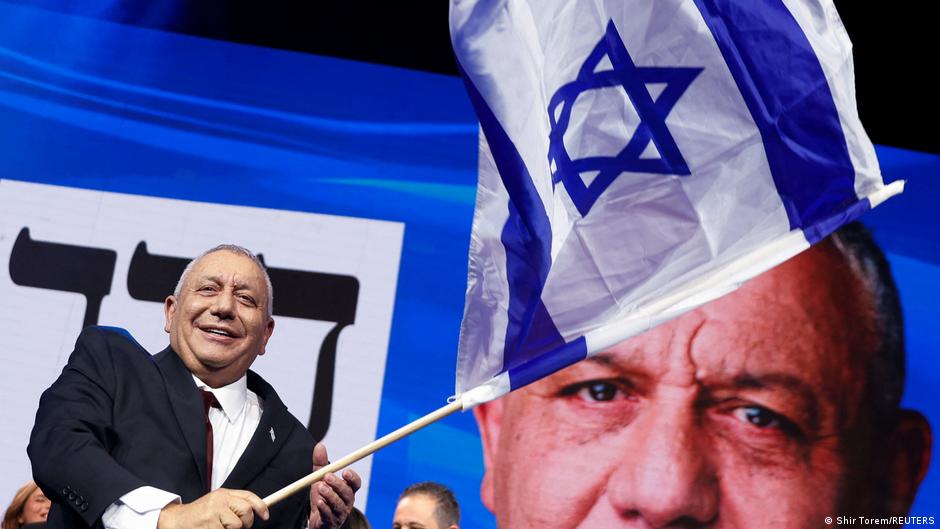
Israeli President Isaac Herzog is set to ask opposition leader Gadi Eisenkot to form a new government following the recent parliamentary election, placing the leader of the Yashad party at the center of a coalition contest whose outcome may have significant economic as well as political consequences.
Herzog’s office said on Saturday, November 7, that the president would formally grant Eisenkot the mandate at the presidential residence in Jerusalem on the evening of Sunday, November 8. Eisenkot will then have 28 days to assemble a governing coalition. The president may extend that period by an additional 14 days if necessary.
The mandate does not automatically make Eisenkot prime minister. If he fails to secure a viable parliamentary majority, Herzog could transfer the task to another politician, including Benjamin Netanyahu, the leader of the governing Likud party. Should Netanyahu also fail, Israel could face another election, prolonging uncertainty over fiscal policy, public spending and the country’s broader economic direction.
Fragmentation raises the cost of governing
No political force won the 61 Knesset seats required for a majority in the October 27 election. The governing far-right coalition led by Likud lost its majority and secured 53 mandates, while the four-party alliance headed by Eisenkot’s Yashad holds 48.
Herzog chose Eisenkot after extensive consultations with politicians and party leaders over their preferred candidate for prime minister. According to The Times of Israel, Eisenkot received 67 recommendations, compared with 46 for Netanyahu. Those recommendations give Eisenkot the first opportunity to negotiate a government, but they do not by themselves guarantee that the same parties will agree on a coalition program, cabinet posts or binding parliamentary support.
The arithmetic makes two Arab parties decisive. Together they won a record 19 Knesset seats, according to AFP. Their support could provide the foundation for an Eisenkot-led coalition, although the former chief of the Israel Defense Forces’ General Staff has previously rejected an alliance with Arab parties.
Netanyahu earlier called for a national unity government intended to prevent parties representing Israel’s Arab citizens, who possess citizenship and voting rights, from participating in government. The dispute therefore extends beyond the identity of the next prime minister. It concerns whether Arab political representation will translate into direct influence over national priorities and the allocation of state resources.
The coalition negotiations will determine not only who governs Israel, but also whether a fragmented parliament can produce a durable framework for economic decision-making.
In structural terms, a narrow or internally divided coalition can make budgets and long-term reforms harder to negotiate. The possibility of another election adds a further layer of uncertainty by delaying the formation of a government able to set stable priorities. Israel’s present deadlock reflects a familiar parliamentary pattern: electoral fragmentation increases the bargaining power of smaller parties and turns policy concessions into the price of assembling a majority.
Security doctrine and economic trade-offs
Eisenkot entered politics in 2022. After the Hamas attack on Israel, he temporarily joined Netanyahu’s war cabinet before returning to the opposition. He has sharply criticized the incumbent prime minister’s governing style and the conduct of the military operation in the Gaza Strip.
He has also condemned violence by Israeli settlers against Palestinians in the occupied West Bank. Eisenkot argues that such violence has contributed to strained relations between Israel and Western countries. Those diplomatic tensions carry an economic dimension because relations with Western governments form part of the external environment in which Israel conducts trade, attracts investment and finances its security needs, even though the source provides no estimate of their financial impact.
Eisenkot’s political reputation rests partly on his military record and partly on personal tragedy. His 25-year-old son was killed in fighting in Gaza in December 2023, and two of his nephews were subsequently killed. One of Eisenkot’s principal election promises was the establishment of an independent state commission to investigate the security failures of October 7, 2023, according to dpa.
Such an inquiry would address questions of institutional accountability that also matter for the economy. Failures in security planning can force governments to redirect resources, while prolonged conflict can intensify competition between defense requirements and civilian priorities. The coalition’s composition will shape how openly those trade-offs are examined and how responsibility is assigned.
Eisenkot is also known as the author of Israel’s Dahiya military strategy. The doctrine calls for an asymmetric and disproportionately large response to security threats, including the destruction of civilian infrastructure in areas used by an adversary to fire on Israel. He applied the doctrine against Hezbollah in Lebanon during the 2006 Lebanon war.
That history complicates any attempt to portray Eisenkot simply as a break with the security policies of the Netanyahu era. His criticism of the current government coexists with a military doctrine built around overwhelming force. The central question is therefore not whether security will remain dominant, but how a new coalition might combine military policy, diplomatic repair, accountability and economic governance.
For now, the immediate challenge is parliamentary. Eisenkot must turn 67 recommendations into at least 61 dependable votes for a government. Whether he can reverse his previous refusal to rely on Arab parties may determine if Israel obtains a new administration or returns to the polls, with political fragmentation continuing to delay durable economic choices.