France Opens Taliban Talks on Afghan Migrant Returns Amid EU Pressure
Technical negotiations expose the economic, legal and diplomatic costs of Europe’s increasingly restrictive migration policy.
France is holding technical talks with representatives of the Taliban about returning some Afghan migrants who lack legal residency, despite having no diplomatic relations with the authorities in Kabul. The negotiations illustrate a widening tension in European migration policy: governments want to enforce removal orders and address public-security concerns, but doing so may require cooperation with a regime they do not formally recognize.
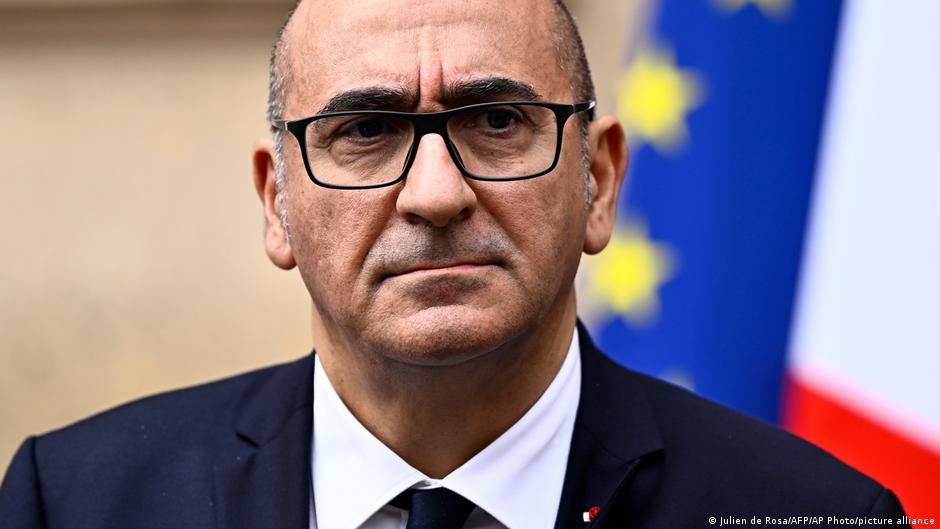
French Interior Minister Laurent Nuñez disclosed the contacts during an address to parliament on Monday, November 2. “We are trying to secure the possibility of returning a certain number of Afghans who are in the country illegally. These are technical discussions,” he said, according to AFP. Nuñez added that other European countries, including Germany, maintain similar contacts with the Taliban.
France does not officially recognize the Taliban government formed after the movement returned to power in 2021. Nor does Paris maintain diplomatic relations with Kabul. Yet France is among roughly 20 European Union countries, including Germany, Belgium and Sweden, seeking to accelerate the return of Afghan citizens, particularly people convicted of crimes.
“We are trying to secure the possibility of returning a certain number of Afghans who are in the country illegally.”
Nuñez said some Afghans living in France “may pose a threat to public order,” making their deportation a government priority. That position reflects the political importance European governments attach to demonstrating that rejected asylum decisions and criminal convictions can lead to removal. Without a functioning return mechanism, immigration controls risk appearing difficult to enforce, intensifying domestic pressure on governments and asylum systems.
The economics of an unenforceable border policy
The immediate dispute is diplomatic and humanitarian, but it also carries structural economic consequences. Returns require administrative coordination, identity verification, transport and assurances that destination authorities will admit deportees. When formal diplomatic channels are absent, these procedures become slower, more expensive and less predictable. Governments must continue supporting or supervising people who cannot be removed, while courts and immigration agencies handle prolonged cases.
This creates a policy divide between the legal decision to remove a person and the practical ability to carry it out. Across Europe, that gap can raise the fiscal and political cost of migration management. It may also encourage governments to pool leverage at the EU level, although the French disclosure shows that national authorities are still pursuing their own operational contacts.
The historical parallel is not formal recognition but pragmatic engagement. States have often maintained working-level contacts with authorities they reject politically when border control, security or humanitarian access requires cooperation. Such arrangements can remain narrowly technical in theory. In practice, however, repeated negotiations may give an isolated government greater international access and bargaining power without requiring it to change domestic policy.
That risk is central to the opposition’s criticism. Léa Balage El Mariky, a lawmaker from the Ecologists party, accused the French government of beginning the “normalization of diplomatic relations” with the Taliban. She said the regime commits crimes against humanity through what she described as “gender apartheid.”
Human rights collide with enforcement priorities
The returns debate is constrained by conditions inside Afghanistan. In September, UN High Commissioner for Human Rights Volker Türk called for an end to forced returns to the country, citing the continuing humanitarian crisis and worsening human-rights situation. His intervention directly challenges the premise that Afghanistan can currently serve as a safe destination for involuntary removals.
Since regaining power, the Taliban has imposed extensive restrictions on women and girls, including bans that exclude most of them from secondary and higher education. The International Criminal Court has previously issued arrest warrants for several senior Taliban figures over allegations of crimes against humanity connected to the persecution of women and girls.
For France and its European partners, the policy dilemma therefore extends beyond individual deportation cases. Cooperation could improve governments’ capacity to remove people they consider dangerous or ineligible to remain. At the same time, the Taliban may benefit from the practical legitimacy and negotiating leverage that such contacts provide. Even when talks are labeled technical, Kabul’s cooperation can become an asset exchanged for concessions, access or a less confrontational relationship.
The longer-term economic effects will depend on whether Europe treats Afghan returns as a narrow security exception or as part of a broader migration strategy. A limited mechanism focused on people convicted of crimes would carry different fiscal, labor-market and humanitarian implications from a large-scale return program. The source account does not specify how many people France hopes to deport, what safeguards would apply or what the Taliban is seeking in return.
Those unanswered questions are consequential. European economies face competing pressures from aging populations, labor demand, strained public services and electorates seeking tighter immigration control. Afghan removals sit at the sharpest edge of that debate because the administrative objective of enforcing immigration law collides with evidence of repression and humanitarian distress in the destination country.
France’s talks may produce only a modest operational arrangement. Nevertheless, they reveal how migration enforcement can reshape foreign policy from below: technical officials establish contacts, practical cooperation becomes routine, and political distance gradually narrows. The central question is whether Europe can preserve a distinction between necessary administrative engagement and the normalization feared by critics.