PACE Adopts Resolution Criticizing Democratic Backsliding in Georgia Amid Political Tensions
The Parliamentary Assembly of the Council of Europe calls on Georgian authorities to halt opposition persecution and repeal repressive laws.
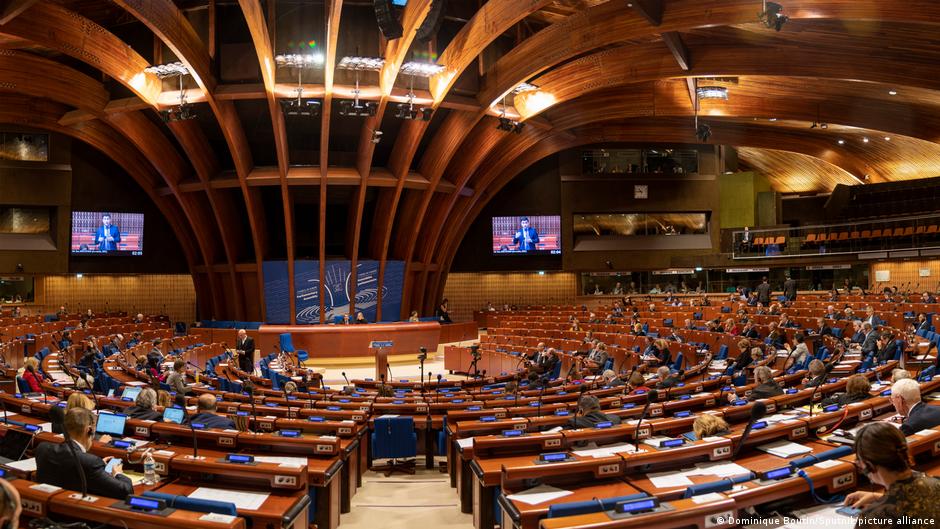
On June 24, 2024, the Parliamentary Assembly of the Council of Europe (PACE) passed a resolution sharply criticizing Georgia's democratic trajectory. The resolution highlights concerns about the erosion of democratic standards in Georgia, particularly the suppression of civil society and political opposition, urging the Georgian government to reverse course.
Context and Content of the Resolution
The resolution was supported by 83 PACE members, with 5 voting against and 4 abstaining. It explicitly calls on Georgian authorities to revoke a series of "repressive laws" and to cease the persecution of opposition leaders. Furthermore, PACE stresses the importance of creating conditions conducive to free and democratic elections.
"The Parliamentary Assembly expresses deep concern over the ongoing democratic backsliding in Georgia, manifested in the suppression of civil society, political opposition, and dissent, despite previous resolutions and recommendations," the document states.
Membership in the Council of Europe entails commitments to uphold democratic principles and respect for human rights. The resolution underscores violations extending beyond political repression, including reforms affecting academic freedom and transnational repressions against journalists.
PACE also urges a thorough investigation into incidents of police violence during demonstrations and emphasizes the necessity for Tbilisi to comply with rulings of the European Court of Human Rights (ECHR) and recommendations from the Organization for Security and Co-operation in Europe (OSCE).
Analyzing the Broader Implications
The adoption of this resolution reflects growing concern within European institutions about the state of democracy in Georgia—a country often viewed as a strategic partner in the region. The persistent political polarization and allegations of authoritarian practices pose risks for both domestic stability and Georgia's aspirations for deeper integration with European structures.
Historically, Georgia has oscillated between democratic progress and authoritarian tendencies since its independence. The current impasse recalls earlier periods where political consolidation undermined pluralism, leading to international censure and internal unrest. The PACE resolution situates itself within this continuum, signaling the international community's impatience with perceived democratic regression.
The Georgian government, however, has contested the resolution's legitimacy. Parliamentary Speaker Shalva Papuashvili denounced the PACE statement as "anti-Georgian," accusing PACE and the European Parliament of failing to recognize Georgia's sovereignty and the electoral mandate of the ruling Georgian Dream party, which won the 2024 parliamentary elections. He raised concerns over what he described as international interference, noting that Georgia's delegation suspended its PACE membership 18 months prior in protest.
This response reveals structural tensions between Georgian authorities and European institutions. It underscores the challenges of balancing national sovereignty claims with international commitments to democratic standards, as well as the difficulties in maintaining effective dialogue amidst mutual distrust.
Structural Economic Consequences
Political instability and democratic backsliding carry significant economic risks for Georgia. Investors prioritize transparent governance and rule of law, elements threatened by political repression and legal uncertainty. Continued erosion of democratic norms may deter foreign direct investment, stall economic reforms, and jeopardize Georgia's ambitions to join European economic frameworks.
Moreover, the repression of civil society and restrictions on academic freedom can impair innovation and knowledge development, crucial for sustainable economic growth. A weakening of democratic institutions often correlates with increased corruption, undermining fiscal stability and public trust.
In the long term, Georgia’s economic trajectory is closely linked to its political governance. The PACE resolution serves as a stark reminder that democratic health is not merely a political matter but a fundamental pillar for economic development and integration within the European and global economy.
Looking Forward: The Path to Democratic Restoration
PACE reaffirms its commitment to dialogue aimed at restoring democratic principles in Georgia. International institutions face the challenge of engaging constructively with Georgian authorities to foster reforms that respect sovereignty while ensuring adherence to democratic norms.
Georgia's democratic future will depend on its ability to reconcile internal political divisions and implement reforms that reinforce judicial independence, protect civil liberties, and guarantee free elections. The international community’s continued attention and support remain critical in this endeavor.