Germany Approves 2027 Budget Amid Increased Borrowing and Defense Spending
The German government plans higher expenditures and debt in 2027, emphasizing defense amid security concerns related to Russia.
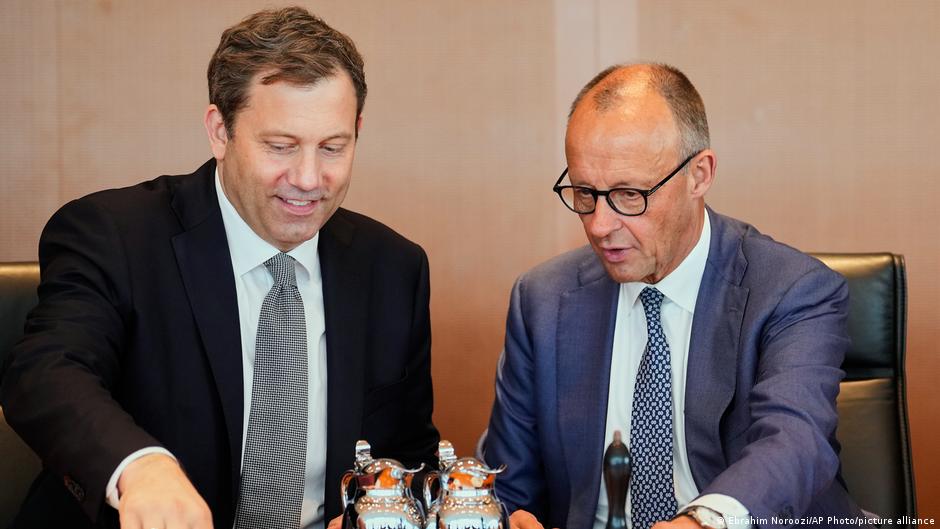
On Monday, July 6, the German government endorsed the draft federal budget for 2027, prepared by Finance Minister Lars Klingbeil. The plan forecasts significant increases in both spending and new borrowing, sparking criticism around the elevated defense budget and the reallocation of climate and transformation funds into the main budget.
The total projected expenditures for 2027 are set at €555.4 billion, marking an almost 6% rise from the current year. Meanwhile, net new borrowing is expected to climb to €118.7 billion, up from €98 billion this year. This fiscal expansion reflects Germany's response to emerging geopolitical risks, particularly the threat perceived from Russia.
Budget Priorities and Structural Implications
The largest portion of the budget remains with the Federal Ministry of Labour and Social Affairs, earmarked at €201.4 billion, predominantly for pension payments. The Ministry of Defence follows as the second largest recipient, with its budget slated to increase by 32.7%, from €82.69 billion to €109.75 billion. The Ministry of Transport is the third largest, allocated €26.43 billion.
“We must make up for three decades of underfunding that weakened our armed forces, and do so within a very tight timeframe,” stated Klingbeil, highlighting the urgency driven by security concerns related to Russia.
Klingbeil justified the budgetary increases by citing the "tense security environment" and the necessity to protect Germany against threats from Russian aggression. He emphasized that Germany cannot afford to maintain a balanced budget while facing these strategic challenges.
However, the budget has sparked concern among economic stakeholders. The Federation of German Industries (BDI) expressed alarm about the planned growth in expenditure and borrowing. CEO Tanja Gönner called for measures that would stimulate economic growth and improve the efficiency of public spending rather than expanding deficits.
Similarly, Helena Melnikov, CEO of the Association of German Chambers of Commerce and Industry (DIHK), warned that by 2030, spending on social services, defense, and debt interest will consume 80% of the budget. She pointed out that this would severely limit fiscal space for investments that could drive economic growth.
Economic and Historical Context
The 2027 budget reflects a significant departure from Germany's historical fiscal conservatism, particularly the post-2010 emphasis on balanced budgets and debt brakes. The boost in defense spending recalls the early Cold War era when West Germany also markedly increased military expenditure amid geopolitical tensions. However, the scale and speed of this planned increase are unprecedented in recent decades.
This shift illustrates a structural recalibration of Germany’s fiscal policy towards prioritizing national security and geopolitical resilience. It simultaneously prompts a debate on the long-term sustainability of public finances, especially as demographic trends pressure pension and social spending.
Moreover, reallocating funds from climate and transformation initiatives to cover broader budget needs may slow Germany's progress on environmental goals, raising questions about balancing immediate security concerns against long-term structural transformations.
Looking Ahead
As the Bundestag prepares to review the draft, the government faces the challenge of reconciling its security-driven spending priorities with the concerns of industry and economic experts advocating for growth-oriented policies. The tension between defense imperatives and economic sustainability will likely shape Germany’s fiscal discourse throughout the coming years.
The 2027 budget signals a historic pivot in Germany’s fiscal trajectory, underscoring how geopolitical factors are now a central driver of economic policy decisions with broad structural consequences for the country’s economic model.