Germany Welcomes Canada’s Decision to Purchase TKMS Submarines in Strategic Defense Move
Canada’s procurement of German-designed Type 212CD submarines marks a significant boost to NATO’s Arctic and North Atlantic security framework.
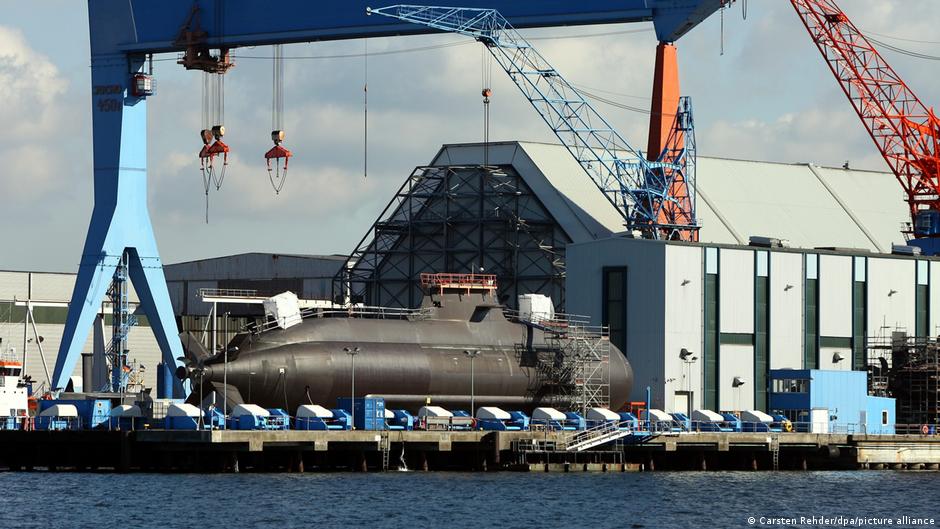
Germany has warmly received Canada’s recent decision to purchase up to 12 Type 212CD non-nuclear submarines from the German shipbuilder ThyssenKrupp Marine Systems (TKMS), a move that signals deepening transatlantic defense cooperation ahead of the NATO summit.
Chancellor Friedrich Merz described the Canadian choice as a "powerful signal" of commitment to European and transatlantic security collaboration. "On the eve of the NATO summit, the Canadian government sends a clear message about the importance of defense partnerships between Europe and North America," Merz said on July 6.
The announcement was made by Canadian Prime Minister Mark Carney, who confirmed the acquisition of up to a dozen advanced submarines jointly developed by Germany and Norway. The Type 212CD model represents a significant step forward in underwater technology, combining stealth, endurance, and Arctic operational capability.
Strategic Implications for NATO and Arctic Security
German Defense Minister Boris Pistorius emphasized that the submarine fleet shared among Canada, Germany, and Norway will be central to NATO’s strategy for securing the High North. "Together, we will create the largest and most modern fleet of non-nuclear submarines in the world. This will allow us to exchange operational intelligence efficiently and enhance situational awareness in the North Atlantic, Arctic, and High North regions," Pistorius stated.
"This collaboration represents a fair burden-sharing within the alliance and strengthens NATO’s security posture in strategically critical areas."
Foreign Minister Johann Wadephul highlighted that the joint German-Norwegian offer prevailed over competing bids from South Korea’s Hanwha Ocean shipyard. Wadephul described TKMS’s submarines as "the world’s best non-nuclear submarines," signifying a new chapter in defense industrial cooperation between the three countries.
The deal, reportedly worth close to €100 billion when including long-term maintenance and operational costs, represents a substantial industrial and strategic investment. The contract reinforces Germany’s position as a key player in high-technology defense manufacturing while deepening Canada’s military ties within the transatlantic alliance.
Historical and Structural Economic Context
This procurement decision echoes earlier Cold War-era collaborations where submarine fleets played pivotal roles in NATO’s deterrence and reconnaissance strategies. The renewed focus on the Arctic and North Atlantic underscores shifting geopolitical priorities driven by climate change, emerging resource competition, and increased Russian military activity.
From an economic perspective, the contract delivers significant industrial spillovers. TKMS, headquartered in Kiel, benefits from sustained high-value manufacturing, research and development investments, and employment. Such large-scale defense exports contribute to Germany’s trade balance and technological leadership in niche maritime sectors.
Moreover, this trilateral industrial partnership may foster standardization and interoperability of naval assets across NATO members, reducing lifecycle costs and enhancing collective defense capabilities.
As defense budgets face competing demands globally, the Canada-TKMS deal exemplifies how strategic procurement can serve both security and economic objectives, leveraging advanced technology to meet emerging regional challenges. It also highlights the increasing importance of non-nuclear submarine capabilities in modern naval warfare and surveillance, particularly in contested maritime environments.