Germany Considers Steinmeier as EU Representative in Potential Peace Talks with Russia
Berlin explores a joint mediation approach involving President Steinmeier and ex-Chancellor Schröder to advance peace negotiations on Ukraine.
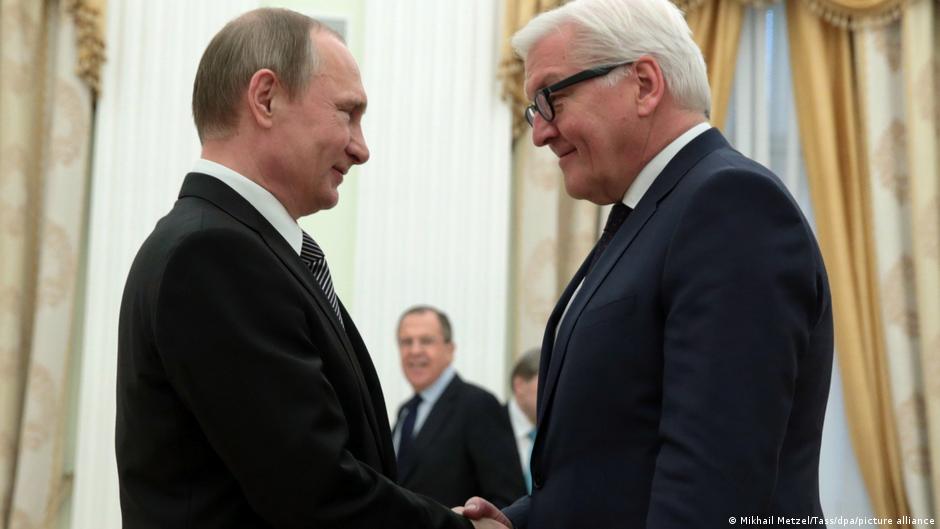
Exploring New Diplomatic Channels Amidst the Ukraine Conflict
The German government is contemplating appointing President Frank-Walter Steinmeier as the European Union’s representative in peace negotiations with Russia aimed at ending the war in Ukraine. This consideration comes alongside the idea of a "mediating duo" pairing Steinmeier with former Chancellor Gerhard Schröder, a long-time confidant of Russian President Vladimir Putin.
According to reports from sources close to the German government, the ruling coalition views this tandem as an "interesting option" but remains skeptical about Schröder’s solo capacity to act as an effective EU envoy. The German administration is cautious about accepting Russia’s proposal, which explicitly favors Schröder as the EU interlocutor, citing concerns over the credibility and impartiality of such a choice given Schröder’s close ties to Putin.
"The German government does not regard Putin’s proposal as trustworthy given Russia’s limited indications of willingness to compromise," one informed source stated.
On May 9, during a Kremlin press conference, President Putin referred to Schröder as his "preferred" candidate to represent the EU in negotiations to conclude the conflict. He emphasized that Russia remains open to dialogue but insisted that Europe must select a negotiator who has not engaged in derogatory remarks against Russia. Putin portrayed Russia as having always conducted discussions with the EU respectfully.
Despite these comments, official negotiations between Russia and Ukraine are currently stalled. Russian Foreign Minister Sergey Lavrov confirmed in mid-April that no formal talks are underway.
Contextualizing the Mediation Proposal: Historical and Structural Implications
The consideration of Steinmeier and Schröder as mediators must be viewed within Germany’s evolving diplomatic posture and the broader geopolitical tensions surrounding the Ukraine war. Steinmeier, who served as Germany’s foreign minister during the early stages of the conflict, has historically advocated for engagement with Russia, seeking dialogue channels even amid rising tensions. Schröder’s political legacy is deeply intertwined with close cooperation with Moscow, embedding him in a network that some view as compromising his neutrality.
The proposal for a joint mediation team reflects Germany’s strategic balancing act—aiming to leverage historical relationships to open dialogue while maintaining a principled stance aligned with EU policy and sanctions against Russia. The German government’s hesitation to endorse Schröder without Steinmeier signals a recognition of the need for diplomatic credibility and broader acceptance within the EU.
Economically, renewed peace negotiations could have significant structural consequences. The conflict has exacerbated energy supply disruptions, impacted global commodity markets, and stressed European economic resilience. A credible mediation framework could pave the way for de-escalation, which is essential for stabilizing energy prices and restoring supply chains disrupted by the conflict and sanctions regime.
However, sources close to the German government remain wary of Russia’s intentions. They suggest that Moscow’s recent statements, including Putin’s proposal, are part of a hybrid strategy aimed at sowing discord within Europe rather than signalling genuine readiness for compromise.
Expanding on this, a federal government insider noted that Putin’s remarks "fit within a series of feigned offers" designed to fracture European unity and derail coordinated policy responses to the war.
Looking Forward: Challenges in Reviving Peace Efforts
For any mediation to gain traction, Germany and the EU will require clear signs of Russia’s commitment to ceasefire extensions and meaningful engagement. Currently, Russia’s temporary three-day ceasefires have not been extended, underscoring the fragility of the situation.
The potential involvement of Steinmeier as an EU envoy could introduce a more balanced and institutionalized approach to negotiations, potentially facilitating dialogue channels previously obstructed by mistrust and political complexities.
Nevertheless, until tangible steps toward de-escalation are observed from Moscow, the chances of substantive negotiations remain uncertain. Germany’s deliberations reflect the broader dilemma confronting European policymakers: how to navigate engagement without conceding on principles or undermining collective security.
This evolving diplomatic calculus encapsulates the intersection of historical ties, geopolitical strategy, and economic imperatives shaping Europe’s response to one of the most significant security crises in recent decades.