Germany’s EV Boom Deepens Profit Challenge for Domestic Carmakers
Electric registrations surged in October, but Chinese brands are capturing a growing share of Germany’s rapidly changing car market.
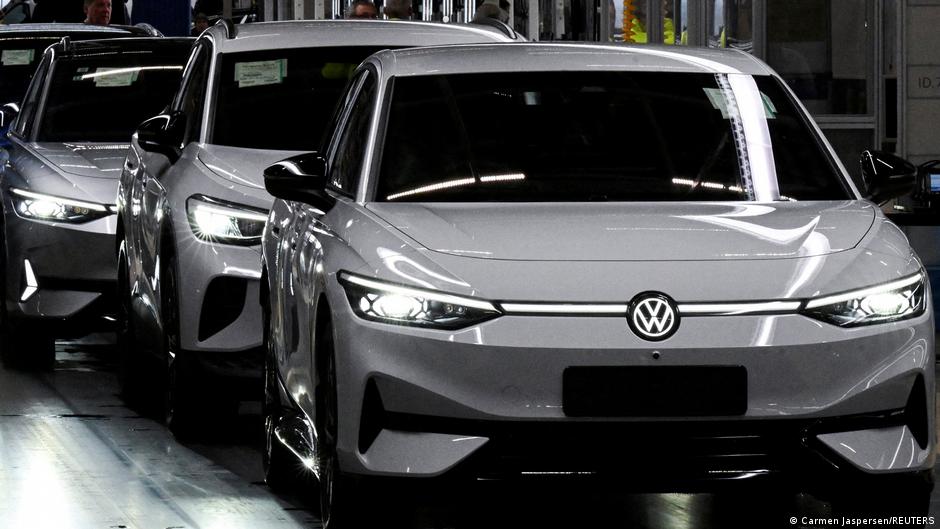
Germany’s transition to electric mobility accelerated sharply in October 2026, yet the expansion is creating an increasingly difficult economic paradox for the country’s automotive industry. Demand for battery-powered cars is rising, supported by high fuel costs and government subsidies, while German manufacturers continue to surrender ground in the segment that is expected to shape the industry’s future.
Data from the Federal Motor Transport Authority, known as the Kraftfahrt-Bundesamt or KBA, show that roughly 254,500 new passenger cars were registered in Germany during October. About 94,000 of them were fully electric vehicles, an increase of approximately 80% compared with the same month in 2025. Electric cars consequently accounted for well over a third of new registrations during the month.
The surge stands in sharp contrast to demand for vehicles with internal combustion engines, a category that in the cited figures also includes hybrids. These models recorded about 62,400 new registrations in October 2026, a steep decline from October of the previous year. Reuters identified high fuel prices and the state subsidy program for electric-car purchases, launched in May 2026, as the principal forces behind the shift.
Subsidies accelerate a structural transition
The latest figures illustrate how energy costs and fiscal policy can reinforce one another. High fuel prices increase the running-cost appeal of electric vehicles, while purchase subsidies reduce the upfront price barrier that has traditionally discouraged households from abandoning combustion-engine models. Together, those pressures can bring forward purchases that might otherwise have occurred several years later.
Germany’s energy crisis has therefore become more than a short-term burden on household budgets and industrial costs. In the car market, it is also changing the composition of demand. The economic consequence is a faster reallocation of consumer spending toward vehicles whose production depends on different supply chains, technologies and competitive strengths than the combustion-engine cars on which German manufacturers built their international position.
Germany’s electric-car market is expanding rapidly, but domestic manufacturers are not capturing the full benefit of that growth.
Government support can increase the total size of an emerging market, but it does not determine which companies will win the resulting sales. That distinction is central to the German experience. According to dpa, foreign automotive groups are the primary beneficiaries of the rapid increase in electric-vehicle popularity. Chinese manufacturers have recorded the strongest growth.
Consulting company EY reported that the market share held by Chinese producers rose from 5.2% to 8.4%. German manufacturers, meanwhile, have been losing share in the electric-car market month after month. The divergence means that public incentives designed to accelerate electrification may support consumer adoption without automatically strengthening Germany’s domestic industrial base.
A challenge to Germany’s automotive model
The automotive sector has long occupied a central place in Germany’s export-oriented economy. Its competitive position was developed around engineering expertise, large-scale manufacturing and globally recognized combustion-engine brands. The move toward electric vehicles changes the basis of that competition. As demand shifts, the commercial value of established strengths in conventional engines can diminish, while performance in batteries, software, pricing and electric platforms becomes more important.
The October data do not by themselves establish how the competitive contest will develop over the longer term. They do, however, expose the immediate structural risk: a country can electrify its vehicle fleet while losing domestic market share in the technologies enabling that transition. If the pattern persists, rising electric-car sales would not necessarily translate into equivalent revenue growth or improved profitability for German groups.
The increase in Chinese brands’ share is particularly significant because it indicates that the transition is widening consumer choice while intensifying price and technology competition. For German companies, the pressure is twofold. They must manage declining demand for combustion-engine vehicles while investing in electric models capable of defending their position in a rapidly expanding market. The old business is weakening before leadership in the new one has been secured.
This resembles earlier periods of industrial change in which policy stimulated demand faster than incumbent producers could adapt their product portfolios. Such transitions can benefit consumers through wider selection and stronger competition, but they can also redistribute income, investment and market power across borders. In Germany’s case, the crucial question is whether domestic manufacturers can convert a subsidized home-market boom into durable industrial strength.
Growth without guaranteed domestic gains
The subsidy program’s launch in May and the sharp year-on-year increase recorded in October suggest that public policy is influencing purchasing behavior. Yet the rise of foreign suppliers demonstrates the limits of demand-side intervention. Subsidies can encourage adoption, but competitiveness ultimately depends on whether manufacturers offer products that consumers choose at the available prices.
Germany’s EV boom is therefore both an environmental and industrial-policy test. The registration figures show rapid progress in moving buyers toward fully electric cars, particularly as expensive fuel makes conventional driving less attractive. At the same time, the loss of market share by German producers signals that faster electrification may deepen pressure on profits and established production structures.
The central economic tension is no longer whether German motorists will embrace electric vehicles. October’s data indicate that demand is already expanding at speed. The more consequential issue is who will supply that demand—and whether Germany’s leading manufacturers can regain momentum before the electric market’s competitive hierarchy becomes more firmly established.