House Advances Graham Bill on Tariffs for Buyers of Russian Energy
The measure would give Donald Trump authority to impose 100% tariffs on major purchasers of Russian oil and gas while extending U.S. sanctions on Iran.
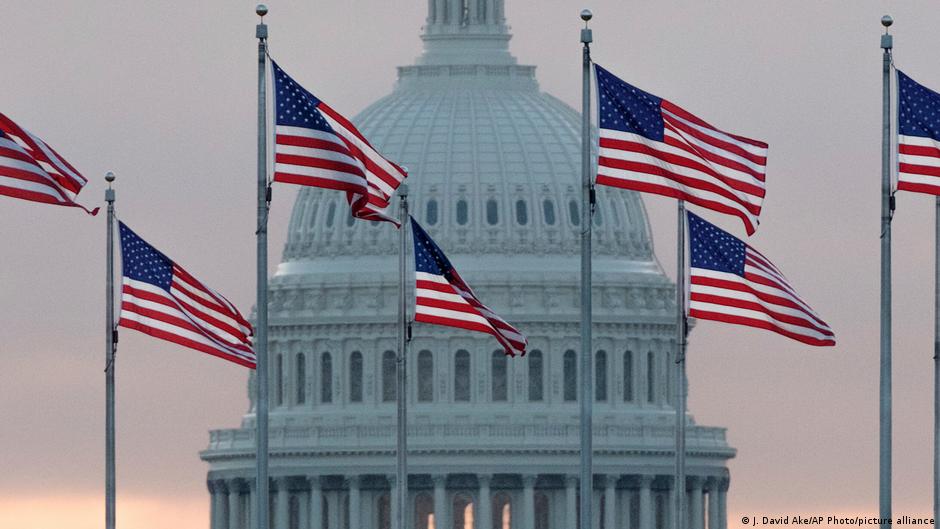
The U.S. House of Representatives has cleared the procedural path for debate on legislation associated with the late Senator Lindsey Graham that would allow President Donald Trump to impose steep tariffs on countries buying Russian energy resources. The vote, held on Tuesday, September 15, opens the way for lawmakers to consider the substance of a bill that supporters frame as a strategic warning to Moscow and Beijing, and critics describe as a major transfer of tariff authority to the White House.
The rule governing consideration of the bill was approved by a narrow margin of 214 to 211, according to The Hill. The result was made possible by two Democrats who broke with their party’s position and supported the procedural resolution prepared by the relevant House committee. With that vote, the House moved the proposal from procedural limbo toward a floor debate that could take place before the end of the week.
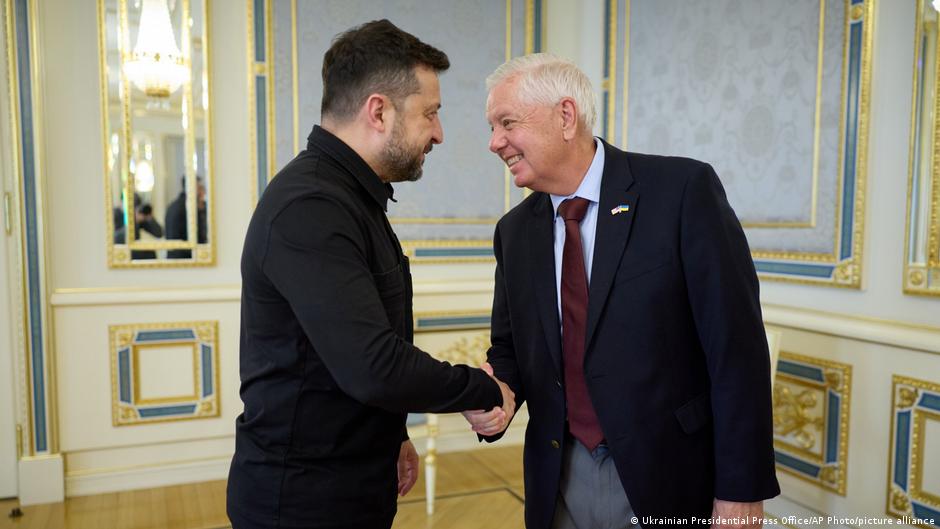
The bill would permit Trump to impose tariffs of 100% on the five largest buyers of Russian oil and gas, as well as on five countries that help Russia evade energy sanctions. It would also extend existing U.S. sanctions against Iran. Media outlets have referred to the measure as the “Graham bill,” in memory of Lindsey Graham, who helped draft and actively promoted the initiative.
A tariff weapon with sanctions logic
The legislation reflects a broader evolution in U.S. economic statecraft. Traditional sanctions tend to target specific entities, individuals, financial flows or restricted technologies. This proposal moves further into the realm of secondary economic pressure, using access to the U.S. market and the threat of punitive tariffs to influence the behavior of third countries that continue to buy Russian energy.
That design is economically significant because Russia’s oil and gas exports remain central to its external revenues and to the durability of its wartime economy. Measures aimed directly at Moscow can be blunted if large importers continue to absorb Russian supply or if intermediaries help reroute trade. By targeting major buyers and sanctions-evasion channels, the bill seeks to raise the cost of maintaining those relationships.
Yet tariffs are a blunt instrument. A 100% tariff on major trading partners could affect supply chains, import prices and diplomatic alignments well beyond the energy market itself. Depending on which countries are ultimately targeted, the policy could spill into consumer goods, industrial inputs and bilateral trade negotiations. That is why the debate is not only about Russia policy, but also about how much discretionary power a president should wield over customs duties.
Critics warned that the bill would “lead to higher prices for Americans” and, over the long term, undermine support for Ukraine.
Those concerns were raised by Democratic lawmakers Don Beyer, Gregory Meeks and Richard Neal, who argued that the bill would sharply expand Trump’s tariff powers without requiring mandatory sanctions against Russia. Their criticism points to a tension at the heart of the proposal: it is presented as a sanctions measure, but its operative force lies in tariffs that the president may choose to impose.
Ukraine, Taiwan and the message to strategic rivals
Supporters of the bill have cast the vote in geopolitical terms. At a House Rules Committee hearing on September 14, Republican Representative Michael McCaul of Texas called the next day’s vote “exceptionally important” as a message to Russian President Vladimir Putin about U.S. support for Ukraine, and as a warning to Chinese President Xi Jinping against any attempt at aggression toward Taiwan.
That linkage is important. The bill is formally tied to Russian energy purchases and sanctions enforcement, but its political framing extends to the credibility of American deterrence. For hawks in Congress, the logic is that tolerating sanctions evasion in one theater weakens the perceived resolve of the United States in others. In that view, a hard economic line against Moscow is also a signal to Beijing.
The historical parallel is the use of economic pressure as a substitute for, or complement to, military escalation. During the Cold War and after, Washington repeatedly used trade restrictions, export controls and financial sanctions to shape adversaries’ choices without direct conflict. What has changed in recent years is the scale of global interdependence. Energy flows, shipping, insurance, finance and consumer markets are now deeply connected, making secondary measures both more powerful and more disruptive.
For Ukraine, the bill’s implications cut in two directions. If effective, it could further constrain Russian revenue and strengthen the economic dimension of Western support for Kyiv. But if it raises prices for American households or creates trade friction with major economies, domestic backing for Ukraine could come under pressure. That is the risk identified by Democratic critics: economic pain at home may gradually weaken political support for foreign policy commitments abroad.
The structural stakes for global energy trade
The proposed 100% tariffs would also test the resilience of the post-2022 energy order. Since Russia’s full-scale war against Ukraine, global energy trade has been reorganized through discounts, rerouted cargoes, price caps and alternative buyers. The result has not been a clean removal of Russian hydrocarbons from world markets, but a more fragmented system in which political risk is embedded into shipping routes and purchasing decisions.
If enacted and used aggressively, the Graham bill could accelerate that fragmentation. Large buyers of Russian energy would face a sharper trade-off between discounted Russian supply and access to the U.S. market. Countries helping Russia bypass energy sanctions would also face the possibility of punitive trade costs. Over time, such pressure could encourage diversification away from Russian oil and gas, but it could also deepen alternative trading blocs less exposed to U.S. leverage.
The bill’s Iran provisions add another layer. By extending existing U.S. sanctions against Iran, the measure ties together two major strands of American sanctions policy: pressure on Russia’s war economy and pressure on Tehran. For markets, that combination matters because both Russia and Iran occupy important positions in the global energy and geopolitical risk landscape.
The House is expected to vote on the bill itself before the end of the current week. If the measure receives support in that full House vote, it will be sent to Trump for signature. The president has previously said he supports the initiative.
The narrow procedural vote shows that the bill’s passage is not merely a question of anti-Russian consensus. It also raises difficult questions about inflation, presidential authority, allied coordination and the long-term architecture of sanctions. In economic terms, the Graham bill is not just another punitive measure against Moscow. It is a test of whether the United States can turn tariff power into a broader tool of energy diplomacy without imposing costs that erode the political coalition behind that strategy.