Berlin Ukraine Summit Links Security Guarantees to Europe’s Economic Future
German politicians argue that sustained military support for Kyiv is essential to credible negotiations and long-term European stability.
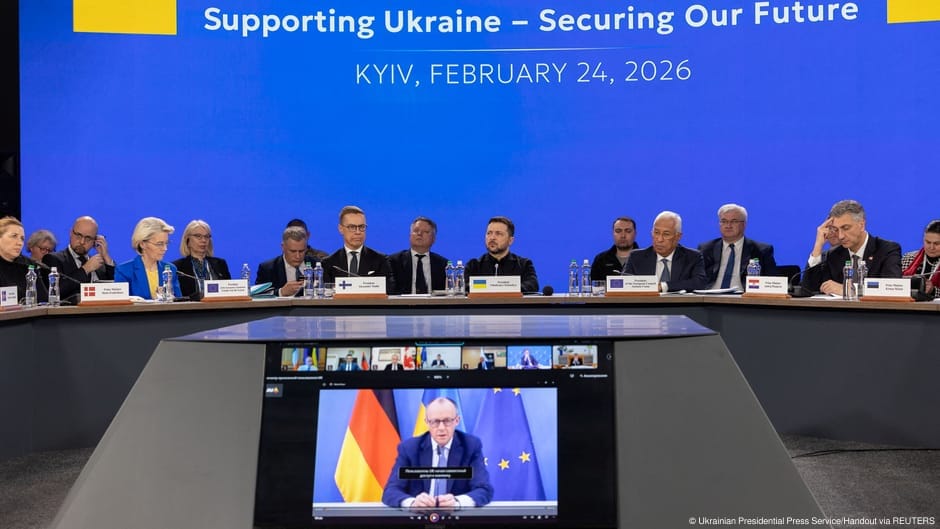
European leaders gathering in Berlin on November 19 face a question with consequences extending well beyond the battlefield: whether the cost of supporting Ukraine now is smaller than the economic and security burden Europe could bear if a settlement rewards territorial aggression.
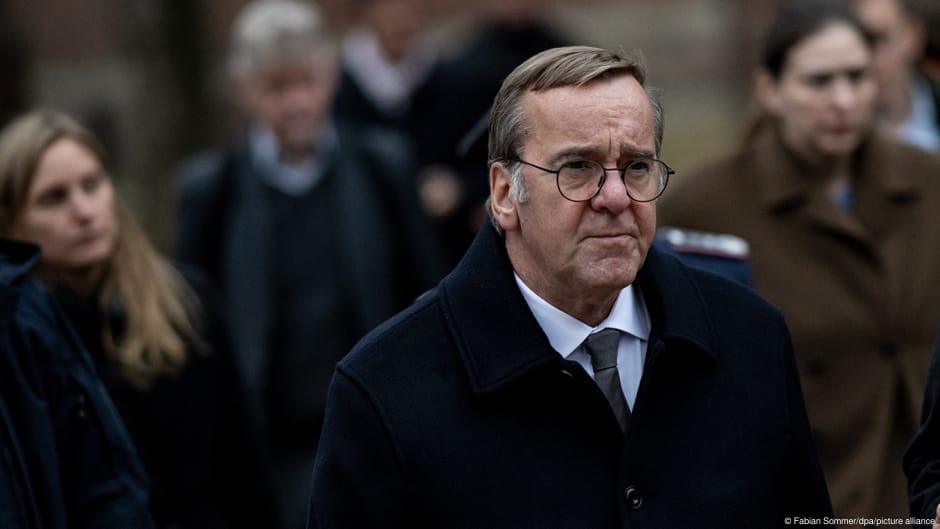
Ahead of the meeting of the so-called coalition of the willing, Thomas Röwekamp, chairman of the Bundestag Defence Committee, said Ukraine must not be pushed into territorial concessions while Russia achieves at least part of its military objectives. The decisive condition, he argued, is that Kyiv should be able to negotiate from a position of strength.
“A peace that rewards Putin for his war of aggression would not be peace, but an invitation to the next aggression,” Röwekamp told the Rheinische Post.
That position frames military assistance not simply as wartime expenditure, but as an investment in the credibility of Europe’s security order. Röwekamp said Ukraine requires continued military support and reliable security guarantees, while Europe must act confidently and in unity. In economic terms, such guarantees are intended to reduce the risk that any ceasefire becomes merely an interval before another conflict, bringing renewed destruction, displacement and fiscal pressure.
Security commitments become long-term fiscal policy
The Berlin talks are expected to include support for Ukraine’s air defence. Their financial foundation includes NATO commitments to provide €140 billion in military assistance in 2026 and 2027, alongside a €90 billion European Union loan to support Ukraine over the same period.
Those sums highlight the structural shift now under way in European public finance. Defence, once treated by many governments as an expenditure that could be constrained after the Cold War, is increasingly becoming a durable budget priority. The change carries trade-offs: higher military allocations compete with infrastructure, industrial investment and social spending unless governments raise revenue, borrow more or expand their economies sufficiently to absorb the additional burden.
At the same time, air-defence assistance has an economic function inside Ukraine. Protecting energy systems, transport networks, factories and cities can limit damage to productive capacity and reduce reconstruction costs. It can also improve the prospects for private investment by lowering operational risk, although military support alone cannot eliminate the uncertainty facing businesses.
The historical parallel is not exact, but Europe’s post-1945 order rested on the idea that credible security commitments create conditions for investment and trade. The argument advanced by German politicians is that ambiguity over Ukraine’s future would have the opposite effect: it could embed geopolitical risk in energy markets, supply chains, insurance costs and capital expenditure across the continent.
Berlin seeks a stronger European negotiating role
Marie-Agnes Strack-Zimmermann, chair of the European Parliament’s Defence Committee, welcomed the decision to hold the talks in Berlin. She said the meeting, convened at the chancellery, sends an important signal to Russia and China that Germany and Europe will not stand by while others claim the right to decide the fate of European territory.
The summit is being held at the invitation of German Chancellor Friedrich Merz, French President Emmanuel Macron and Prime Minister Andy Burnham under the banner “United for Peace in Ukraine and European Security.” Representatives from 37 countries are expected, mostly at the level of heads of state or government, together with leaders of the EU and NATO.
Berlin police have announced unprecedented security measures in the German capital’s government district, reflecting the seniority of the participants. The scale of attendance also illustrates how the conflict has evolved into a test of Europe’s institutional capacity: governments must coordinate military aid, financing and diplomatic positions while managing different domestic economic constraints.
The format is intended to ensure close coordination among Ukraine’s partners and support further direct negotiations between Russia and Ukraine, with active US and European participation. Following the recent meeting of negotiators in Abu Dhabi, leaders in Berlin will discuss how to coordinate the next steps.
Coordination as an economic signal
For markets and businesses, the practical value of the coalition may depend less on summit language than on whether its members convert commitments into predictable policy. Fragmented procurement, uncertain aid schedules and shifting national positions can weaken deterrence while raising costs. Greater coordination could support longer production runs for defence manufacturers, improve planning and reduce duplication, although the source provides no breakdown of how the announced funds will be allocated.
The coalition has existed since spring 2025. Its most recent in-person meeting took place in Paris on July 13, followed by a hybrid meeting on August 24. France, the United Kingdom and Germany serve as co-chairs. Participants include European Council President António Costa, European Commission President Ursula von der Leyen, EU foreign policy chief Kaja Kallas and NATO Secretary-General Mark Rutte.
The Berlin meeting therefore represents more than another diplomatic gathering. It brings together negotiations, security guarantees and large multiyear financial commitments in a single policy framework. The central economic question is whether Europe can sustain that framework while strengthening its own industrial base and maintaining political cohesion. German lawmakers’ message is that the alternative—an unstable settlement that encourages future aggression—could ultimately prove far more expensive.