Kyiv Power Crisis Exposes Economic Costs of Ukraine’s Governance Rift
A public clash between Volodymyr Zelensky and Vitali Klitschko highlights how wartime energy damage is straining institutions and urban resilience.
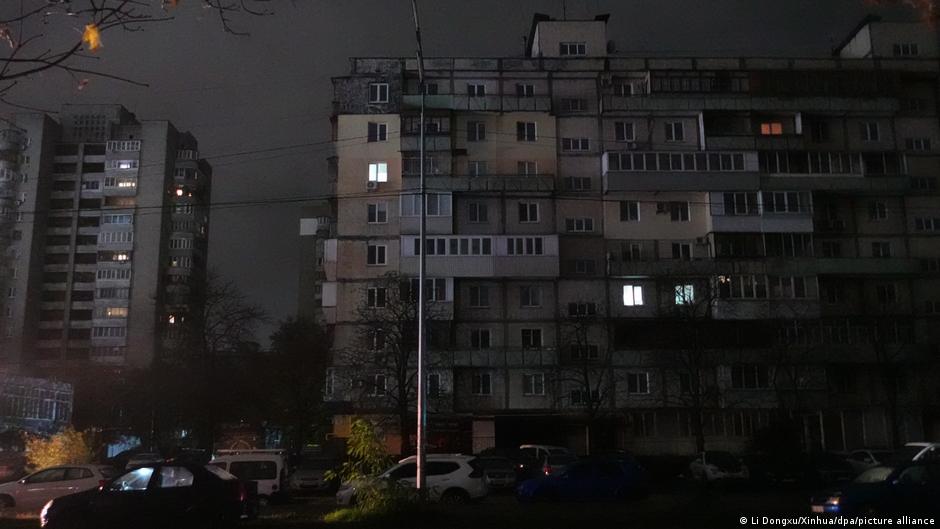
Ukraine’s escalating energy crisis has opened a public dispute between President Volodymyr Zelensky and Kyiv Mayor Vitali Klitschko, exposing not only the physical vulnerability of the country’s infrastructure but also the institutional tensions surrounding its repair. With millions of Ukrainians facing interruptions to electricity, heating and water as colder weather arrives, the argument over responsibility carries significant economic consequences for the capital and the country as a whole.
On Friday, November 6, Zelensky criticised Kyiv’s municipal authorities over prolonged water and electricity outages caused by Russian attacks. “At the city level, preparations have failed,” the president said in his evening address. He described the disruption as the result of decisions that had not been implemented locally in preparation for the heating season and for what he called Russia’s operation against Ukraine’s energy sector.
Zelensky said the government had discussed with energy companies the need to deploy additional repair crews and accelerate the restoration of damaged infrastructure. He also announced that more teams would be mobilised and that Ukraine’s armed forces would help address the consequences of the attacks.
Klitschko responded several hours later, challenging the premise that Kyiv’s administration could have prevented damage caused by a nationwide military campaign. In a post on Telegram, he asked how the capital was supposed to have stopped a “Russian special operation against Ukrainian energy” and questioned why representatives of the city authorities were not invited to meetings where Kyiv’s preparations and response were being discussed.
“When it is being destroyed across the whole country, it cannot be that somewhere the lights are shining while somewhere else Klitschko has switched everything off,” the mayor said.
A nationwide network, but divided political responsibility
The technical dispute centres on the integrated nature of Ukraine’s electricity system. Klitschko stressed that the country operates a single interconnected grid, meaning damage to generating assets, substations or transmission equipment in one area can create shortages and instability elsewhere. That argument shifts attention from municipal preparedness to the national coordination of generation, transmission, distribution and emergency repair capacity.
Zelensky likewise acknowledged that the problem extends beyond electricity generation. He said Russia’s tactics were aimed at destroying power grids, transformers and distribution equipment. Consequently, some regions continued to experience shortages even when sufficient generating capacity was available. “This is solved through repairs, and speed is important,” he said.
Economically, the distinction matters. A shortage of generation requires additional electricity supply or reduced consumption, while damaged networks can prevent available power from reaching households and businesses. The latter problem places a premium on replacement equipment, skilled workers, logistics and rapid access to damaged sites. It also creates uneven local outcomes within a nationally connected system, complicating attempts to assign responsibility to a single level of government.
The clash therefore reflects a recurring problem in infrastructure governance: operational duties may be distributed across city authorities, national ministries, energy companies and emergency services, while political accountability is concentrated more narrowly. In peacetime, overlapping responsibilities can slow investment and maintenance. Under sustained attack, the same institutional ambiguity can delay decisions about crews, equipment and priorities precisely when the economic value of speed is greatest.
Urban outages carry compounding costs
For Kyiv, prolonged outages affect far more than household comfort. Electricity supports water pumping, communications, transport, retail activity and the operation of offices and other workplaces. Interruptions can therefore spread through the urban economy, reducing working hours and forcing households and businesses to spend more on backup power and alternative services. Water and heating failures magnify those pressures during the autumn cold.
The dispute also risks weakening confidence in crisis management. Klitschko accused the central authorities of maintaining a “mantra” that Kyiv was the worst performer and relying on manipulation and falsehoods. He said the government, in attempting to remove him and failing to assist the capital, was effectively “destroying Kyiv.” His remarks turned a technical argument about preparedness into a broader confrontation over political power and control of the capital.
Historical experience with major infrastructure shocks shows that recovery depends on both physical resources and credible coordination. Networks can sometimes be repaired quickly, but repeated damage changes the economic calculation: scarce components must be allocated among competing regions, repair teams face sustained demand, and temporary measures can become prolonged operating conditions. Each new strike may also damage assets that were only recently restored.
Russia has intensified missile and drone attacks on Ukraine’s energy infrastructure in recent weeks. Millions of Ukrainians are now living through autumn cold without heating and are also confronting interruptions to electricity and water supplies. The immediate priority is restoration, but the structural challenge is larger: Ukraine must keep an interconnected national system functioning while critical equipment remains exposed to repeated attacks.
The public confrontation between Zelensky and Klitschko illustrates the economic danger of fragmented authority during that process. Faster repairs require central access to resources and national system data, but cities possess local knowledge of essential services and neighbourhood-level needs. If political rivalry obstructs that exchange, the cost will be measured not only in longer outages but also in lost output, higher emergency spending and declining resilience across Ukraine’s largest urban economy.