Flydubai Halts Israel Flights as Security Shock Tests Gulf Air Links
The suspension exposes how quickly a single cockpit incident can strain aviation agreements, regional diplomacy and post-normalization transport flows.
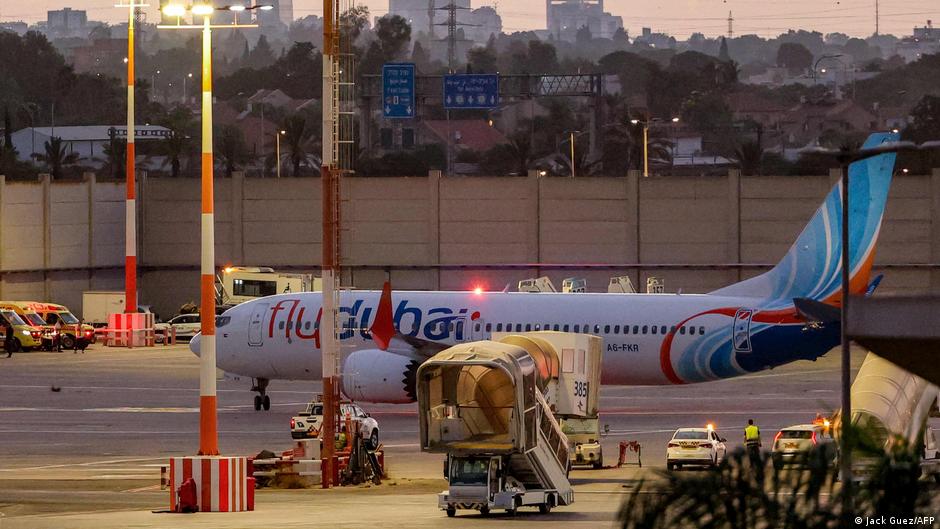
Flydubai has suspended all flights to and from Israel while authorities investigate an incident involving one of its Boeing 737 MAX 8 aircraft flying from Dubai to Tel Aviv, after the plane was forced to land in Saudi Arabia. The decision, announced by the Dubai-based carrier in the early hours of Thursday, October 1, turns what began as an in-flight security emergency into a wider test of aviation governance, regional political trust and the economic infrastructure built around Gulf-Israel connectivity.
According to Flydubai, the temporary halt is intended to allow the relevant authorities to continue their work and establish the full circumstances of the incident. An official representative of the airline said the carrier was coordinating closely with the government of the United Arab Emirates and other stakeholders. A decision on when flights will resume will be made as further information becomes available.
“The temporary suspension will allow the relevant authorities to continue their work and establish all the circumstances of the incident,” a Flydubai representative said.
The suspension affects a corridor that has become more than a routine commercial route. Direct flights between the UAE and Israel have been one of the most visible economic outcomes of normalized diplomatic ties, serving business travel, tourism, family visits and broader investment links. A disruption of this kind is therefore not only an operational decision by an airline. It also raises questions about the resilience of the agreements, staffing rules and security assumptions that underpin regional air connectivity.
Aviation Risk Becomes a Diplomatic and Economic Issue
The incident prompted an immediate response from Israel. After the morning emergency, Israeli Transport Minister Miri Regev demanded the cancellation of all Flydubai flights to Israel. She called on the Civil Aviation Authority to investigate whether the UAE had violated its aviation agreement with Israel. That agreement reportedly stipulates that only pilots holding passports from countries that maintain diplomatic relations with Israel may land in the country. Israel has no such relations with Oman.
The nationality issue has become central because media reports say the alleged attacker may be an Omani citizen. The claim has not been confirmed officially. Still, the question illustrates the fragility of regulatory trust in international aviation: airlines operate through multinational crews, route networks cross politically sensitive airspace, and a single personnel-related allegation can quickly become a matter of bilateral compliance.
For the Gulf and Israeli economies, that matters. Air routes are enabling infrastructure. They support tourism receipts, cargo options, service-sector activity and investor mobility. Since normalization, carriers have helped convert diplomatic agreements into practical economic exchange. When flights are paused, even temporarily, the impact is not limited to ticket holders. Hotels, conference organizers, tour operators, airport service providers and corporate travel plans all absorb uncertainty.
The Flydubai case also carries broader historical resonance. Aviation has repeatedly served as both a symbol and a vulnerability in periods of geopolitical transition. New air corridors often signal improved relations, but they also depend on unusually high levels of procedural confidence. The episode recalls earlier periods when regional instability translated rapidly into route changes, insurance concerns, higher compliance costs and tighter passenger screening. Even without a prolonged suspension, the market may price in higher operational caution.
The Flight and the Emergency Landing
Flydubai flight FZ1073 was traveling from Dubai to Tel Aviv when it made an emergency landing at the airport in Tabuk, Saudi Arabia, at around 9:00 a.m. local time after a signal indicating an attempted hijacking. The reported trigger was a confrontation in the cockpit. According to the main version of events cited in the source, the co-pilot attacked the aircraft commander with a knife and attempted to take control of the plane.
During the struggle, the aircraft descended sharply over Saudi territory, falling from 9,410 meters to 5,105 meters in just 29 seconds. There were 174 people on board the Boeing 737 MAX 8, including 27 children, most of them Israeli citizens.
Some passengers said they first heard shouting from the cockpit, after which the cockpit door opened and they saw that one pilot had been injured and that his clothing was covered in blood. First aid was provided, and one passenger was a doctor. Crew members and passengers also managed to subdue the attacker.
The landing in Saudi Arabia was carried out by two other pilots who were on board as passengers. CNN described them as reserve pilots who were due to operate the next flight. Israel Hayom reported that the two were Ukrainian and Russian, though there has been no official confirmation of that information. Other reports said the aircraft may have been landed by citizens of South Africa and New Zealand.
Later, Israeli Prime Minister Benjamin Netanyahu said Saudi authorities had arrested the pilot who stabbed his colleague. Media reports have identified the suspect as an Omani citizen. Israeli intelligence sources cited by The Telegraph did not rule out that he intended to seize control of the aircraft and direct it toward a skyscraper in Tel Aviv. One source described the suspected scenario as similar to September 11, in which a co-pilot kills the pilot and crashes the aircraft in Israel with passengers on board, most of them Israelis. Israeli Defense Minister Israel Katz called the incident involving the Flydubai flight an attempted jihadist terrorist attack.
The wounded pilot was identified as the captain, Indian citizen Smith Machchhar. Netanyahu wrote on X that despite serious injuries, Machchhar resisted, opened the cockpit door and allowed passengers and crew to neutralize the attacker, preventing an in-air catastrophe. Machchhar’s condition is described as stable.
After the emergency landing of FZ1073 in Saudi Arabia, Flydubai sent a second aircraft to transport passengers to Israel. That plane landed at Ben Gurion Airport in Tel Aviv.
Costs of Uncertainty
For Flydubai, the immediate cost is operational disruption: aircraft scheduling, crew assignments, passenger rebooking and reputational pressure. For Israeli and Emirati authorities, the more significant question is whether existing aviation protocols are considered sufficient after the investigation. Any tightening of crew eligibility rules, background checks or cockpit security procedures could raise compliance costs and complicate staffing across international carriers.
The episode may also influence risk perceptions around Middle Eastern airspace. Saudi Arabia’s role as the emergency landing site is notable because it turned a bilateral UAE-Israel flight issue into a regional incident managed through Saudi jurisdiction. That reflects the interdependence of aviation systems in the region: even when diplomatic relations are limited or indirect, emergency procedures require practical cooperation.
The structural consequence is that aviation normalization remains vulnerable to security shocks. Direct flights can deepen economic integration, but their continuity depends on confidence among regulators, airlines, passengers and governments. Flydubai’s suspension is temporary in form, yet it underscores a lasting economic lesson: regional connectivity is only as strong as the security architecture that supports it.