Lithuania, Poland, and France Conduct Joint Military Exercises to Secure Suwalki Corridor Amid Rising Tensions
Amid strategic concerns, NATO allies enhance defence readiness near the Suwalki Corridor against potential Russian threats.
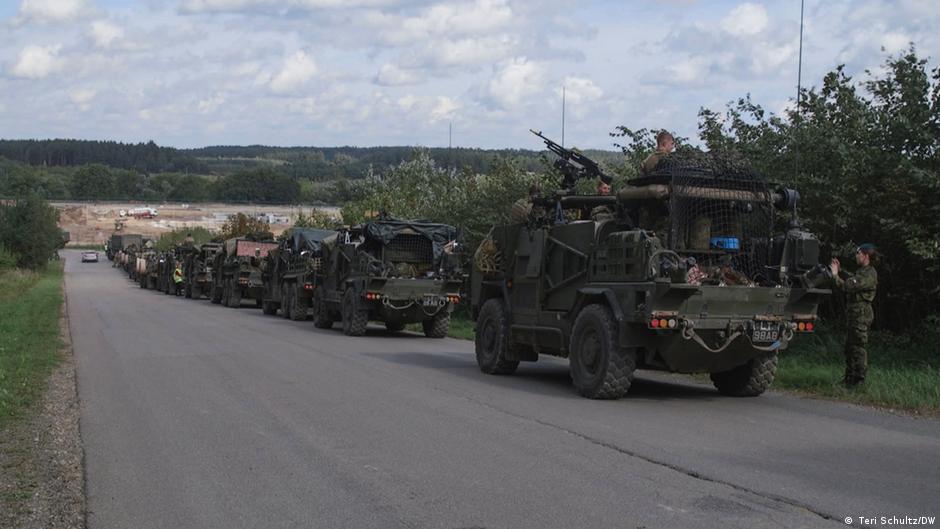
From June 16 to 26, Lithuania, Poland, and France are conducting joint military exercises near the Suwalki Corridor, a crucial narrow land strip connecting the Baltic states to the rest of the European Union. The maneuvers, named "Gallant Boar 2026," aim to synchronize allied infantry operations and improve capability to defend this geopolitically vital region.
Strategic Importance of the Suwalki Corridor
The Suwalki Corridor, a stretch of less than 100 kilometers between Russia's Kaliningrad exclave and Belarus, holds significant strategic weight for NATO and the EU. It is the sole land route linking Lithuania, Latvia, and Estonia with mainland Europe. Analysts and policymakers fear that in any future conflict, Russia might seek to seize control of this corridor, effectively isolating the Baltic states from NATO support.
This concern has prompted sustained military vigilance and infrastructure investments. Lithuanian and Polish forces regularly conduct exercises to reinforce operational readiness in this area. Recently, Lithuania approved the construction of a military training ground near the corridor, expected to be operational by 2028 and capable of hosting up to 4,000 troops, underscoring the long-term commitment to regional defense.
"We see Russian forces concentrating on western positions, expanding military bases and increasing personnel—signs pointing to a potential peak of confrontation around 2029," said General Carsten Breuer, Inspector General of the German Bundeswehr.
Broader Military Context and Future Outlook
Alongside these regional developments, NATO is restructuring command elements to facilitate rapid troop deployments to Estonia and Latvia, anticipating possible escalations along its eastern flank. Recent satellite imagery published by Scandinavian and Baltic media corroborates reports of Russian military base expansions near its western borders, with estimates suggesting Russia may station up to 115,000 troops in the vicinity.
Despite these preparations, NATO commanders maintain that Russia is unlikely to pursue an overt confrontation with the alliance. U.S. General Christopher G. Cavoli, NATO's Supreme Allied Commander Europe, emphasizes Moscow’s awareness of NATO’s asymmetric advantages, which serve as a significant deterrent.
The exercises near the Suwalki Corridor thus represent not only tactical training but also a strategic signal of NATO’s resolve to uphold its eastern defenses. They illustrate how the alliance combines military preparedness with infrastructural and organizational enhancements to counterbalance Russia’s posture in the region.
Historically, corridors such as Suwalki have been flashpoints due to their role as chokepoints linking allied territories. The current emphasis on the corridor echoes Cold War-era strategies where controlling access routes was pivotal to regional security architectures. The contemporary geopolitical landscape, marked by Russia’s ongoing conflict in Ukraine and its military posture, reinforces the corridor's criticality in European defense calculus.