Macron Links Ukraine Aid Debate to Europe’s Economic Security
France’s president argues that reducing support for Kyiv would raise long-term security risks as fiscal pressures divide European governments.
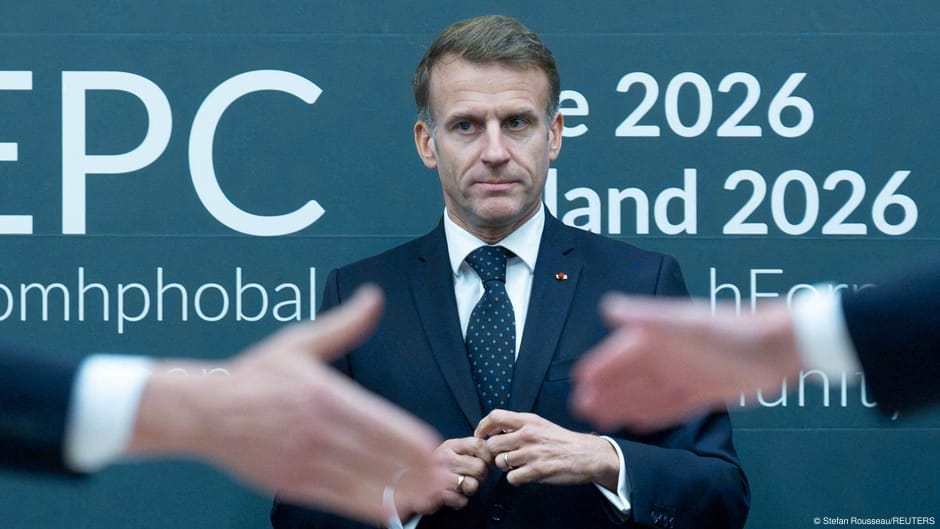
French President Emmanuel Macron has criticized opponents of continued support for Ukraine, arguing that attempts to limit assistance would expose both Kyiv and the wider European continent to greater long-term risks. His intervention places Europe’s increasingly contentious aid debate within a broader question: whether governments should prioritize immediate fiscal relief or accept sustained costs to reduce the probability of another war.
In a post published on X on Saturday, November 14, Macron said that if Russia were able to impose its will by force on one European country, the result would weaken the entire region. He described advocates of restricting aid as seeking to force Ukraine into an unjust peace that would leave the country vulnerable.
“Those who call for limiting aid to Ukraine, in effect, want to force it into an unjust peace, to make it vulnerable in the long term — and therefore to make all of Europe vulnerable. This is the spirit of defeatism. It is a direct path to the next war.”
Macron said the war in Ukraine was the central subject at the ninth European Political Community summit on November 12 and at an informal summit of European Union heads of state and government in Dublin on November 13. According to the French president, leaders agreed on two priorities: helping Ukraine survive the winter and continuing joint work toward what he called a just and lasting peace.
“Europe must take the most active part in this, because the security of our continent depends on this peace,” Macron said. His formulation treats assistance not solely as a transfer to Ukraine but as expenditure on a European public good: deterrence. From that perspective, the immediate budgetary cost must be weighed against the potentially much larger economic damage associated with prolonged instability, disrupted investment and higher defense requirements.
Fiscal constraints test Europe’s strategic ambitions
The dispute illustrates a structural tension within Europe’s response to the war. National governments make contributions from budgets constrained by domestic priorities, debt and deficit rules, while the security benefits are distributed across the continent. That imbalance can encourage individual states to reduce spending in the expectation that others will maintain the collective effort.
Macron’s comments followed an announcement by Polish Prime Minister Donald Tusk in Dublin on November 13 that Poland would suspend contributions to the PURL program, under which European countries purchase American weapons for Ukraine. Tusk cited Poland’s large budget deficit and Warsaw’s already high defense expenditure.
“We have helped and continue to help Ukraine very seriously. But, given our financial capabilities, Poland will not invest additional funds, because we have our own defense and security expenditures, which are among the highest in Europe,” Tusk said.
A similar position was expressed in Dublin by Bulgarian Prime Minister Rumen Radev. Addressing discussion of a new loan for Kyiv, Radev said Bulgaria was currently unable to provide financial support to Ukraine and noted that the European Union had opened an excessive-deficit procedure concerning his country. He said Bulgaria would consider participation only if the money were directed toward humanitarian assistance, energy supplies and medical needs rather than weapons purchases.
These positions do not amount to a rejection of all assistance. Instead, they reveal how fiscal capacity can shape its composition. Governments facing budget pressure may prefer humanitarian or energy support, which can be easier to defend politically, while limiting military commitments that compete directly with national defense programs. The result could be a more fragmented European aid framework, with countries choosing different forms and levels of participation.
NATO and the postwar security architecture
Macron also argued that Ukraine, which he described as possessing Europe’s strongest conventionally armed military, belongs in NATO. In his assessment, Kyiv and the alliance together play a key role in Europe’s security architecture.
“Now we must go further and clearly indicate, including to the Russian side, how we see the postwar order. We must also determine what we expect from the United States in the context of Europe’s long-term security,” he said.
The reference to Washington adds an economic dimension to the strategic debate. Europe’s reliance on American weapons and security guarantees affects procurement, industrial planning and the distribution of defense costs across the Atlantic. The PURL program itself highlights that dependence: European financing is used to acquire US-produced arms for Ukraine.
For European policymakers, the central challenge is therefore not simply whether to continue supporting Kyiv. It is how to finance that support while rebuilding national arsenals, observing fiscal constraints and developing a credible postwar security system. A durable arrangement would influence defense budgets, borrowing needs, industrial capacity and investment decisions for years.
Macron’s warning frames reduced aid as a false economy: savings achieved today could produce larger security and fiscal liabilities later. Poland and Bulgaria, however, demonstrate that long-term strategic arguments must still pass through national budgets. The widening gap between continental objectives and domestic financial capacity is likely to remain one of Europe’s most consequential economic policy tests.