Mass Migrant Influx into Spanish Enclave Ceuta Highlights EU Border Vulnerabilities
The sudden surge of over 60,000 migrants into Ceuta from Morocco exposes complex economic and political challenges for Spain and the European Union.
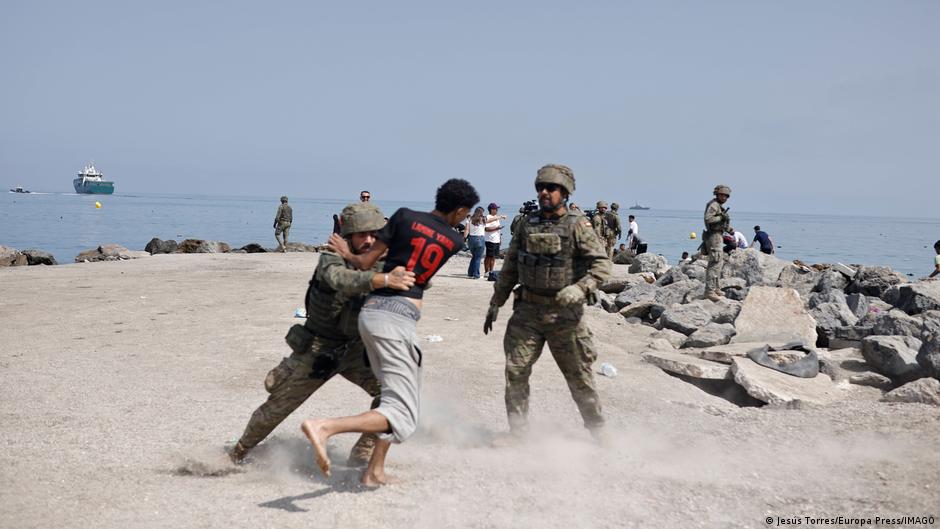
In late July 2023, the Spanish autonomous city of Ceuta, located on the northern coast of Africa and bordering Morocco, experienced an unprecedented influx of over 60,000 migrants attempting to cross into Spanish territory. The extraordinary event has been described by Spain's Prime Minister Pedro Sánchez as an "attack" on Spanish sovereignty and a breach of the nation's territorial integrity. This incident spotlights broader structural issues affecting migration pressures, border security, and economic stability within the European Union.
Geopolitical and Economic Context of the Ceuta Crisis
Ceuta, with a population of approximately 85,000 inhabitants, serves as one of Spain's two North African exclaves and a strategic gateway between Africa and Europe. The city's unique geography has historically made it a focal point for migratory flows, often reflecting wider regional tensions and economic disparities. Over recent years, the complex relationship between Spain and Morocco regarding border control and migration management has oscillated between cooperation and tension.
In this latest crisis, tens of thousands of migrants embarked on perilous journeys from Morocco, many risking their lives by crossing the Strait of Gibraltar or attempting to scale fences. Tragically, at least 57 people have drowned during these attempts. The humanitarian dimension underscores the dire socio-economic conditions driving migration from sub-Saharan Africa and parts of the Maghreb.
From an economic perspective, the sudden influx strained local infrastructure and social services in Ceuta, which is ill-equipped to handle such a rapid population surge. Local businesses suffered as protests erupted, with many residents expressing fear and distrust towards governmental handling of the situation. The temporary closure of shops and the perception of rising insecurity highlight the immediate economic disruptions at the community level.
“Many people are afraid to leave their homes,” a Ceuta resident told national broadcaster RTVE, illustrating the social anxiety caused by the influx.
Spain's deployment of military personnel to maintain order marked a rare escalation in border enforcement, indicating the severity with which Madrid viewed the crisis. Furthermore, nearly all migrants eventually returned voluntarily or were repatriated to Morocco, reflecting complex bilateral dynamics and pressure from Spanish authorities.
Implications for European Union Border Policy and Economic Stability
The Ceuta incident reverberated beyond Spain's borders, prompting Italy to unilaterally suspend the Schengen Agreement’s free movement provisions with Spain to safeguard its own national security. This move exemplifies emerging fractures within the EU’s approach to shared border governance, especially in the face of sudden migratory shocks.
Economically, the event exposes vulnerabilities in the EU’s external border management systems and underscores the costs associated with irregular migration. Beyond humanitarian concerns, large-scale irregular migration places pressure on public resources, labor markets, and regional economic cohesion. The Ceuta crisis also raises questions about the resilience of the Schengen Area’s open-border framework amid asymmetric migration flows from neighboring regions.
Historically, migration surges have often coincided with geopolitical instability, economic downturns, or shifts in international relations. In this case, Spain’s strained ties with Morocco and regional economic disparities have converged to produce a flashpoint that challenges existing policy frameworks.
Looking forward, the Spanish government and the EU face a need to reassess migration management strategies to balance humanitarian obligations, border security, and economic sustainability. Multilateral cooperation with transit and origin countries remains crucial to mitigating irregular migration pressures while addressing root causes such as poverty and conflict.
The Ceuta episode serves as a potent reminder of the intricate linkages between migration, economic stability, and political sovereignty within a globalized world.