Merz Says Era of Unconditional Transatlantic Friendship Is Over
Germany’s chancellor frames the rift with Washington as both a strategic rupture and an opening for economic and security renewal.
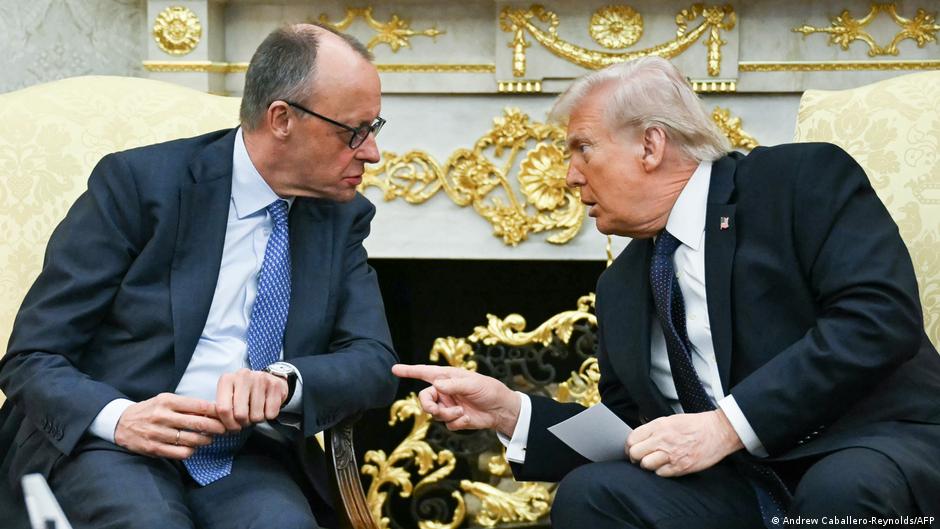
German Chancellor Friedrich Merz has declared that the era of “unconditional transatlantic friendship” is likely to remain in the past for a long time, marking one of the clearest signals yet that Berlin sees its relationship with Washington entering a structurally different phase. Speaking at a Christian Democratic Union campaign event in Berlin on Thursday, September 17, Merz said Germany was witnessing a shift in political thinking and in the assessment of the transatlantic alliance on the other side of the Atlantic that Europeans may once have found hard to imagine.
The remarks came amid a sharp deterioration in relations between Berlin and Washington under U.S. President Donald Trump. According to dpa, the tensions have deepened over disagreements surrounding the U.S. and Israeli war against Iran, as well as the trade wars launched by the White House. At the beginning of Trump’s second presidential term, his attitude toward Merz had been favorable. Relations worsened after Merz refused to support the United States in the war with Iran, after which Trump began criticizing the German authorities, including by attributing false statements to Merz.
“We are observing on the other side of the Atlantic a change in political approaches and in the assessment of the transatlantic alliance that we perhaps could not have imagined,” Merz said, according to dpa.
A Strategic Break With Economic Consequences
For Germany, the political rupture carries implications beyond diplomacy. Since the postwar period, German economic strategy has rested in part on a broad bargain: export-led growth, integration with European markets, and a U.S.-anchored security framework that reduced the need for Berlin to bear the full cost of strategic defense. Merz’s comments suggest that this model is now under pressure from several directions at once: geopolitical conflict, trade friction, and a U.S. administration more willing to intervene rhetorically in European domestic politics.
The deterioration has also been sharpened by Washington’s gestures toward Germany’s far right. Earlier in September, Trump congratulated the Alternative for Germany on its victory in regional elections in Saxony-Anhalt. The move amounted to another sign of support from Washington for German right-wing populists, a pattern that had already drawn criticism in Berlin. German officials reacted with irritation, particularly because the endorsement touched on sensitive domestic debates over migration and electoral legitimacy.
Metin Hakverdi, the German government’s coordinator for transatlantic cooperation, responded by stressing that Germans are capable of deciding for themselves how to handle migration and whom to elect. “We do not need advice from the White House on this,” he said. His remarks underline a broader concern in Berlin: that transatlantic tension is no longer limited to tariffs, defense burdens, or foreign policy, but now reaches directly into Germany’s political system.
Yet Merz presented the strain not only as a threat, but also as an opportunity. He argued that the tensions emerging between Europe, including Germany, and the United States create openings the country should not miss. Germany, he said, must seize the moment and assume greater responsibility for its own security and development. In that context, he pointed to the federal government’s significant increase in defense spending.
Economically, this is a consequential shift. Higher defense spending may support industrial capacity, technology investment, and public procurement, but it also forces hard choices in a country still wrestling with reform needs after years of stagnation. A more self-reliant Germany would likely require not only larger military budgets, but also stronger infrastructure, deeper capital investment, more resilient energy and transport systems, and a clearer industrial policy for a less predictable global order.
Recovery After Stagnation
Merz also said he sees signs of economic recovery in Germany after several years of stagnation. He noted that forecasts point to economic growth of around 1.3 percent in 2026. “We have come out of this valley of shrinking or stagnating economy,” the chancellor said, while adding that the country still needs reforms.
That formulation is important. A return to growth, if realized, would not by itself resolve Germany’s structural challenges. The country’s recent stagnation has raised questions about competitiveness, investment, demographic pressure, energy costs, and the resilience of export-oriented manufacturing. Merz’s emphasis on reforms suggests that the government views the projected recovery as fragile rather than self-sustaining.
The historical parallel is striking. In earlier periods of geopolitical change, Germany’s economic model adapted within a stable Western framework: postwar reconstruction under U.S. security guarantees, reunification inside NATO and the European Union, and globalization under relatively open trade rules. The present moment is different because several pillars are shifting simultaneously. The United States remains an essential actor, but Berlin is openly acknowledging that automatic political alignment can no longer be assumed.
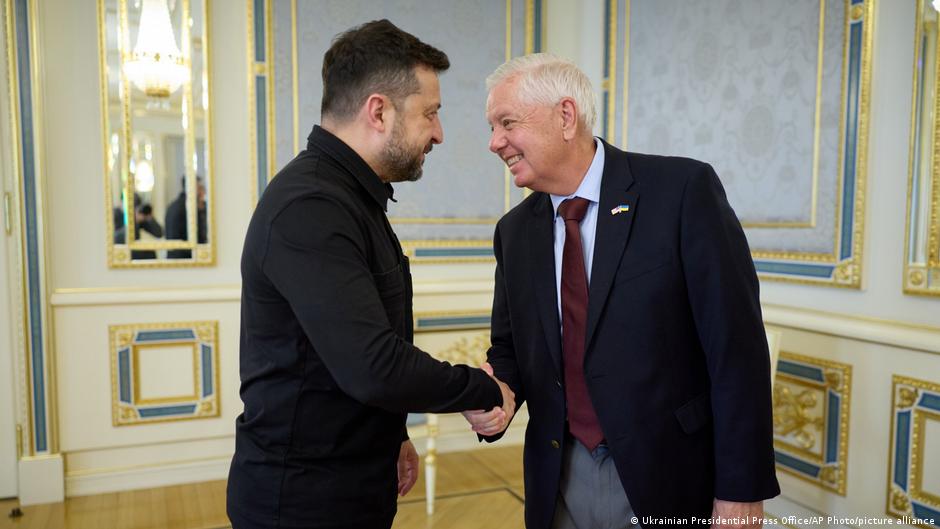
Later on Thursday, German government spokesman Stefan Kornelius said Merz and Trump had held a telephone conversation that Berlin had previously postponed. According to Kornelius, Merz raised the issue of the “next steps to end” Russia’s war against Ukraine, welcomed the U.S. Congress’s approval of a sanctions package against Russia initiated by Senator Lindsey Graham, and discussed shipping problems in the Strait of Hormuz and the Red Sea caused by the war in Iran.
The chancellor also recalled the terrorist attacks of September 11, 2001, whose anniversary had been the original occasion for the planned call between the two leaders. Berlin had postponed the conversation indefinitely the day before it was scheduled, without giving reasons. The delay followed Trump’s praise for the Alternative for Germany after its decisive victory in Saxony-Anhalt’s state parliament election, which had already provoked anger in Berlin.
For investors, policymakers, and Germany’s industrial base, the message from Merz is less about a single diplomatic dispute than about a reordering of assumptions. If Berlin can no longer count on a frictionless relationship with Washington, then defense, trade, energy security, and fiscal priorities become more tightly connected. The chancellor’s argument is that Germany should treat the end of unconditional friendship not only as a loss, but as a forcing mechanism for modernization.
The risk is that political tension with the United States, support from Washington for German populists, and costly new security obligations could complicate the very reforms Merz says are still needed. The opportunity is that a Germany emerging from stagnation may use the pressure to redefine its economic model around resilience rather than dependence. Either way, the transatlantic alliance is no longer being described in Berlin as a settled foundation. It is becoming a variable in Germany’s economic future.