Merz Ties Wider EU Financial Decisions to Shared Ukraine Funding
Germany’s chancellor is pressing every EU member to help close a €45 billion gap and secure Ukraine’s long-term financing.
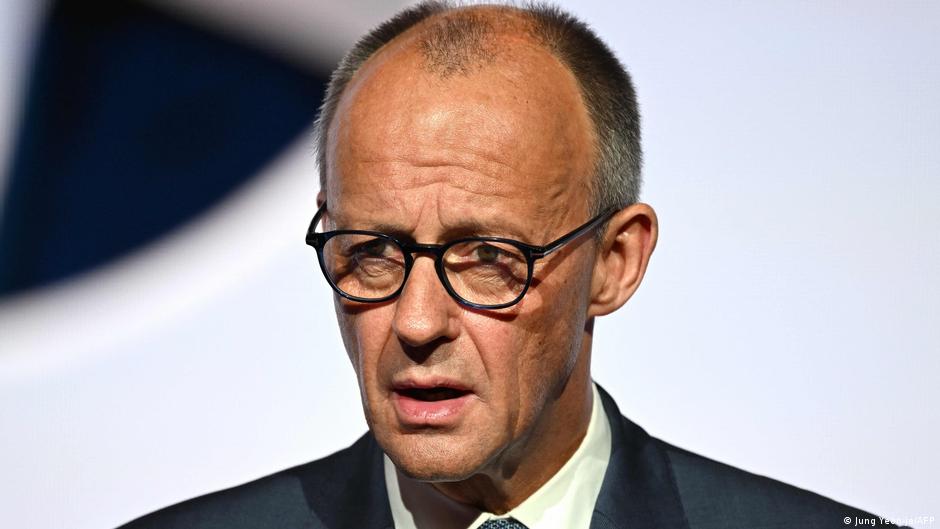
German Chancellor Friedrich Merz has raised the stakes in the European Union’s debate over financing Ukraine, demanding that every member state make a “fair contribution” toward a multibillion-euro shortfall and signaling that other EU financial decisions could otherwise be blocked.
In a letter to European Council President António Costa, Merz argued that a collective commitment to supporting Ukraine was a “necessary condition” both for resolving the immediate funding problem and for discussing other matters with financial consequences. The letter, reported by dpa on Monday, November 9, concerns €45 billion that Ukraine is expected to lack in the coming year.
The intervention turns Ukraine’s financing from a stand-alone foreign policy issue into a test of the EU’s wider capacity to distribute common costs. By linking agreement on Kyiv’s needs to progress elsewhere, Merz is applying the logic of conditionality that frequently shapes European budget negotiations: governments seeking consensus in one area may be required to compromise in another.
“Support for Ukraine is a matter of our indivisible European security, and this principle must also apply to the distribution of the burden of this support,” Merz wrote.
From emergency packages to a structural commitment
Merz is also calling for a durable, multiyear solution to be incorporated into negotiations over the EU budget for 2028-2034. Ukraine is now in the fifth year of resisting Russian aggression, and the German position suggests that Berlin no longer views repeated short-term packages as sufficient for either Kyiv’s planning or the Union’s own fiscal management.
The European Commission previously estimated Ukraine’s financing gap for next year at €70 billion, of which the EU would need to cover €45 billion. Ukraine’s President Volodymyr Zelensky asked partners in October for an additional €70 billion so that the country could continue defending itself against Russian aggression. EU leaders subsequently instructed the Commission to prepare a proposal addressing that need.
The scale of the new gap is notable because the EU agreed last year to provide Kyiv with a €90 billion loan for 2026 and 2027. Hungary’s former government held up that decision for an extended period, but the country’s new prime minister, Péter Magyar, lifted the blockade. Kyiv received the first tranche of the loan on June 25. Even with that facility, however, the available resources are now considered insufficient.
This repeated expansion of financing needs highlights a central economic challenge for the EU: assistance initially treated as an exceptional response is becoming a continuing expenditure that must compete with other priorities. Embedding Ukraine support in the 2028-2034 budget framework could make funding more predictable, but it would also expose disagreements over national contributions, fiscal capacity and the balance between common European obligations and domestic spending.
Burden-sharing collides with unanimity politics
Merz has asked Costa to make the issue a priority at the EU’s informal summit in Dublin on November 13. The timing reflects the difficulty of achieving a common position when several governments are reluctant to participate in new financial assistance.
Bulgarian President Rumen Radev and Slovak Prime Minister Robert Fico have already said that they do not intend to take part in a new EU package for Ukraine. The contributions of Hungary and the Czech Republic are also uncertain. Merz is due to meet Magyar in Berlin on November 10, with support for Kyiv expected to be among the principal topics.
The dispute illustrates a recurring weakness in EU economic governance. Large collective commitments can depend on negotiations among governments with different political mandates and budget constraints. A member state can use its leverage over a decision requiring broad agreement to seek concessions elsewhere, while larger contributors can threaten to withhold consent from unrelated financial files unless costs are shared more evenly.
Merz’s approach effectively mirrors that bargaining structure. His message is that Germany will not accept an arrangement in which support for Ukraine is described as a common European security interest while the financial burden remains concentrated among a smaller group of states. If maintained, that position could complicate other budgetary negotiations but might also force governments to clarify whether common security commitments carry common fiscal responsibilities.
Germany’s numbers sharpen the political argument
Germany is by far Ukraine’s largest donor among EU member states. The German government valued its support as of June 30, 2026, at €100 billion. The Kiel Institute for the World Economy, however, estimated that €36 billion of that amount was spent inside Germany and that another €22 billion represented future commitments.
Those distinctions matter economically and politically. Headline totals may combine direct assistance, domestic expenditure linked to the consequences of the war and money committed for later years. They therefore do not necessarily represent funds already transferred abroad. Nevertheless, the size of Germany’s reported contribution gives Merz a basis for demanding broader participation.
The immediate question is how the EU will cover the €45 billion assigned to it. The longer-term issue is whether Ukraine financing becomes a stable component of the Union’s fiscal architecture. If member states cannot agree on that transition, repeated emergency negotiations could continue to create uncertainty for Kyiv and turn each new package into leverage across unrelated EU financial decisions.