Putin Threatens Armenia with Tariff Hikes Amid Eurasian Economic Union Exit Talks
Russia warns Armenia of increased transport and energy tariffs if it leaves the Eurasian Economic Union, citing geopolitical and economic integration risks.
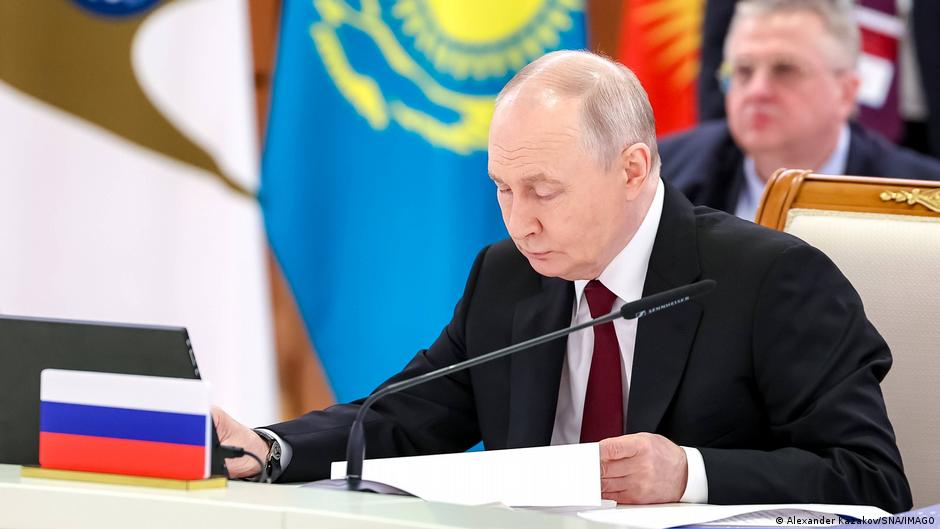
Russian President Vladimir Putin has issued a stern warning to Armenia regarding its potential withdrawal from the Eurasian Economic Union (EAEU), forecasting significant economic repercussions if the country moves closer to European Union standards and away from its current integration framework.
Economic Leverage as Political Pressure
Speaking at a press conference following the EAEU summit in Astana on May 29, Putin stated that if Armenia begins aligning with EU standards, Russia would have no choice but to dismantle the existing economic integration between the two countries. "Who will they supply their products to, where will Armenian wine go?" he questioned, highlighting the potential disruption of Armenia’s export markets.
Specifically, Putin threatened to increase tariffs on railway transportation and raise prices on energy supplies to Armenia. He also indicated that Armenian citizens would be required to obtain work patents to be employed in Russia, signaling a tightening of labor mobility.
"If Armenia starts transitioning towards EU standards, we will have to sever all economic integration with them," Putin remarked, emphasizing the stakes involved in Armenia’s geopolitical orientation.
These measures illustrate the strategic leverage Russia wields via economic dependencies, especially in sectors vital to Armenia’s infrastructure and trade. Armenia’s position as an EAEU member, alongside Russia, Belarus, Kazakhstan, and Kyrgyzstan, has ensured privileged access to these markets under common tariffs and standards.
Historical Parallels and Propaganda Rhetoric
In his address, Putin drew a controversial historical parallel by citing a phrase commonly misattributed to Nazi propaganda minister Joseph Goebbels regarding the utility of lies in mass manipulation. Putin claimed that EU media reports on Russia planning war against the EU were "nonsense and lies," labeling such reports as products of "mass deception." He referenced a phrase about the efficacy of blatant lies to illustrate the alleged media manipulation.
However, the phrase actually originates from Adolf Hitler’s Mein Kampf, not Goebbels, reflecting a deliberate but historically inaccurate invocation aimed at discrediting Western narratives. This rhetorical strategy serves to frame the West’s accusations as ideological fabrications while reinforcing Russia’s narrative of victimhood and defensive posture.
Escalating Economic Sanctions and Political Context
The intensified pressure on Armenia coincides with its growing rapprochement with the European Union and the upcoming parliamentary elections scheduled for June 7. Russia’s use of economic tools has escalated recently:
- Rosselkhoznadzor, the Russian agricultural watchdog, has banned imports of several Armenian products, including mineral water, vegetables, and brandy.
- The Russian Ministry of Energy has threatened to suspend agreements for duty-free supplies of petroleum products, natural gas, and unprocessed diamonds to Armenia.
These actions underscore the structural economic consequences for Armenia should it choose to distance itself from the EAEU framework, impacting not only trade but also critical energy security and industrial inputs.
Putin and other Russian officials have repeatedly emphasized that Armenia cannot simultaneously maintain membership in both the EU and the EAEU, framing the choice as mutually exclusive and fraught with economic and political risk.
Broader Implications for Regional Integration
The call from EAEU member states for Armenia to hold a referendum on its membership demonstrates the institutional effort to consolidate the union and prevent defections. This episode reflects broader geopolitical tensions between Russia and the EU over influence in post-Soviet states, with economic integration mechanisms serving as instruments of foreign policy.
For Armenia, the dilemma encapsulates a complex calculus balancing sovereign choices, economic dependencies, and regional security concerns. The prospect of tariff hikes, export restrictions, and labor mobility constraints illustrates how economic integration frameworks can be both a shield and a lever in geopolitical contestation.
As Armenia approaches critical domestic elections, the interplay between economic pressures and political decisions will shape its strategic trajectory and the future architecture of Eurasian regional cooperation.