Russia Opens Three-Day Duma Vote With Occupied Regions Included
The parliamentary election extends Russia’s managed political cycle into occupied Ukrainian territories under rules observers say are hard to verify.
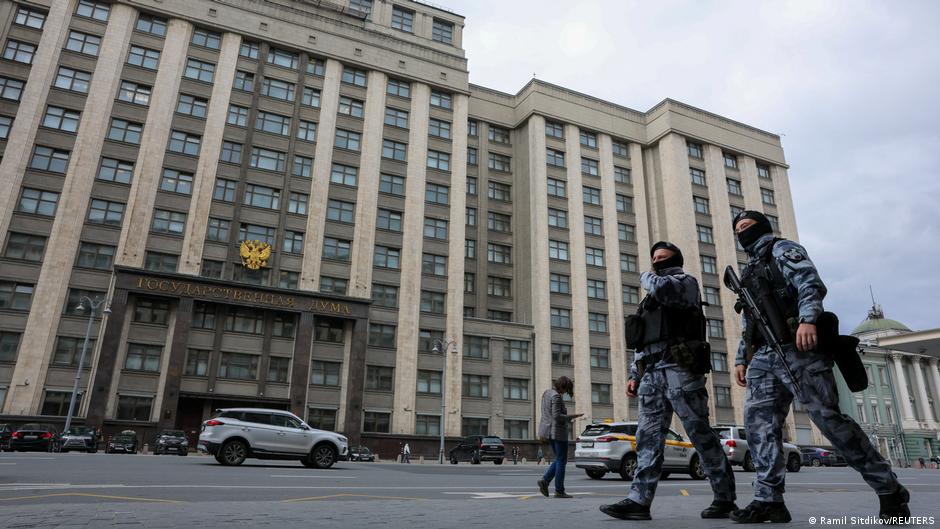
Russia formally opened three days of voting for the State Duma on Friday, September 18, at 08:00 local time, beginning in the Far Eastern regions of Kamchatka and Chukotka. Polling stations across the country are due to remain open until 20:00 local time through September 20, extending a voting format that has become increasingly important to the state’s management of electoral logistics and political control.
The election will determine the composition of the lower house of Russia’s parliament. Half of the 450 seats are to be filled in single-member constituencies, where voters choose individual candidates. The other 225 seats are allocated through party lists. Ten parties are listed for the party-list contest after Yabloko, a party that had consistently criticized the war in Ukraine, was removed from participation on formal grounds. Some Yabloko candidates remain on ballots in single-member races in several Russian regions.
For Russia’s political economy, the mechanics of this election matter beyond the immediate distribution of seats. The Duma has become a central institution for codifying the wartime state: approving budgets, enabling administrative controls, and legitimizing legal changes that affect businesses, households, local governments and occupied territories. A multi-day vote, early voting, limited transparency in some areas and the exclusion or pressure on anti-war candidates all point to an institutional environment in which electoral procedures reinforce rather than constrain executive power.
A Vote Extended Into Occupied Territories
The previous State Duma election was held in 2021. This year, voting has been expanded to occupied Ukrainian territories. Russian officials from various structures reported that participants in Russia’s full-scale invasion of Ukraine, as well as residents of regions occupied by Russia, voted early from late August through September 17.
Observers have emphasized that even leaving aside the question of legitimacy in those territories, the way Russia’s Central Election Commission organized the process makes the results almost impossible to verify. Authorities did not publish information about members of regional election commissions or the addresses of polling stations. Open video monitoring was not arranged. The use of mobile ballot boxes was allowed. The Central Election Commission also permitted local election bodies, when necessary, to print ballots on site and not immediately transfer them to higher-level bodies after the count.
Those procedural details have economic significance because elections in occupied areas are part of a broader administrative incorporation process. Once Moscow treats such territories as part of its electoral map, it also strengthens the political framework for budget allocations, infrastructure claims, property rules, taxation, subsidies and military-related spending. In historical terms, this resembles the use of electoral and legal forms to normalize territorial claims, even when external recognition and domestic verification remain deeply contested.
Observers say the vote in occupied regions was organized in a way that makes its results practically impossible to verify.
The inclusion of occupied territories also widens the gap between Russia’s formal institutions and the international environment in which its economy operates. Sanctions, capital controls, defense spending priorities and fiscal pressure are all linked to the war. A legislature elected through a process that includes occupied regions is likely to continue serving as a vehicle for laws that deepen that wartime economic model.
Managed Competition and the Absence of Anti-War Parties
None of the ten parties represented in the 2026 State Duma election has condemned the continuing war in Ukraine. Yabloko was initially allowed to take part, but was later barred from the party-list contest on formal grounds. Individual Yabloko members are still running as single-member candidates, though some have faced pressure and removal from races for various reasons, often connected to old photographs and social media posts, including references to Alexei Navalny.
Shortly before the election, opposition figures Yulia Navalnaya and Maxim Katz urged Russians to vote for the strongest single-member candidates who were not members of United Russia. Yabloko criticized that strategy and advised voters instead to spoil their ballots. The dispute reflects the limited choices available within Russia’s electoral system: tactical voting seeks to exploit remaining competitive fragments, while ballot spoiling signals rejection of the overall process.
From an economic perspective, the weakness of parliamentary pluralism reduces the visibility of policy alternatives. Debates over military spending, regional subsidies, social obligations, taxation, mobilization-related labor constraints and long-term growth prospects are less likely to be contested through open electoral competition. The Duma’s role becomes less about bargaining among organized social interests and more about ratifying the priorities of the executive and security state.
That has structural consequences. In market economies, political competition can act as a feedback mechanism: business groups, workers, regional authorities and consumers can channel dissatisfaction into policy adjustment. In Russia’s current setting, where anti-war political representation is narrowed and electoral verification is contested, that feedback loop is weaker. Policy errors may persist longer, and the costs of the war economy may be distributed with less public scrutiny.
AI Claims and Control of Election Narratives
Before voting began, pro-government Russian resources circulated videos whose central message was that footage showing fraud or ballot stuffing at polling stations could be generated by artificial intelligence. Ella Pamfilova, the head of Russia’s Central Election Commission, also said such technologies could allegedly replace live images from polling stations in real time.
The emphasis on AI-generated fakes serves a political function before any disputed evidence appears. By warning in advance that compromising footage may be synthetic, officials and pro-government media create a framework for discounting future claims of irregularities. In an election already marked by multi-day voting, early voting in sensitive territories and reduced transparency in occupied areas, that narrative may further complicate independent assessment.
For investors, economists and policymakers watching Russia, the election is therefore less a conventional contest over legislative control than a measure of institutional consolidation under wartime conditions. The formal architecture remains: party lists, single-member districts, regional polling stations, election commissions and official procedures. But the substantive environment is shaped by exclusion, pressure on dissenting candidates, contested territorial inclusion and preemptive challenges to possible evidence of fraud.
The result is a parliamentary vote that illustrates how political institutions can be used to stabilize a wartime economic order. The State Duma elected through this process will inherit not only legislative authority, but also the task of sustaining the legal and fiscal framework of Russia’s confrontation with Ukraine and the West. That makes the election consequential even if its competitive uncertainty is limited.