Russian Strikes on Kyiv, Odesa and Sumy Injure Children and Hit Civilian Assets
The overnight attacks underscored the continuing economic toll of Russia’s war on Ukraine’s cities, infrastructure and household security.
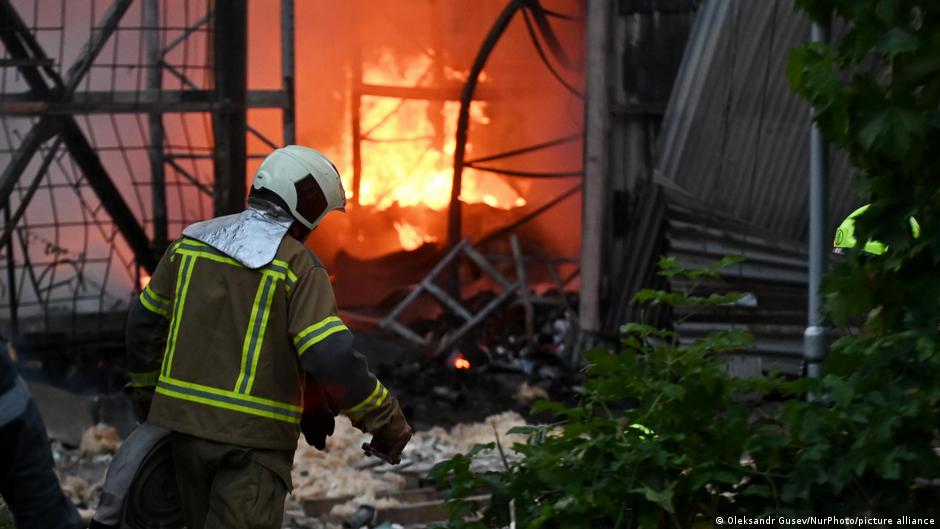
Russia carried out a large-scale overnight missile attack on Kyiv on Thursday, September 17, injuring at least 12 people, including two children aged 10 and 12, according to Kyiv Mayor Vitali Klitschko. The attack formed part of a wider wave of strikes that also hit Odesa and Sumy, where officials reported civilian casualties, damage to residential and non-residential buildings, and further strain on emergency and medical services.
Klitschko said on Telegram that nine of those injured in Kyiv were in hospitals. Earlier, the Kyiv City Military Administration said the 10-year-old child hurt in the Russian attack was a girl. The immediate human cost was accompanied by damage to warehouses, homes, an office building and an educational facility, pointing to the broader economic pattern of the war: repeated attacks on urban spaces where civilian life, logistics, schooling and local commerce overlap.
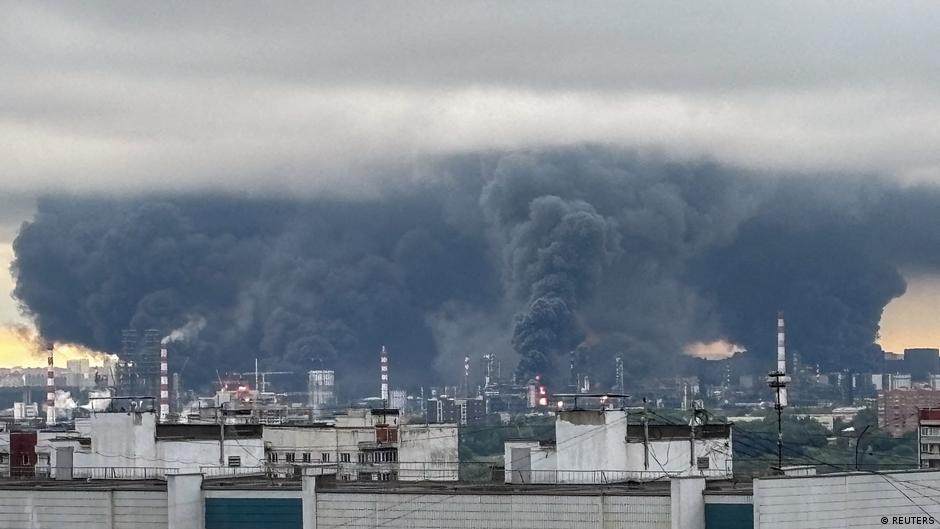
By morning, authorities in Kyiv had reported damage to warehouse premises in the Solomianskyi and Dniprovskyi districts of the Ukrainian capital. The city administration said a residential building in the Dniprovskyi district was also affected. Klitschko separately reported that glazing and the facade of a three-story office building were damaged in Dniprovskyi, while windows were shattered in several residential buildings. In the Sviatoshynskyi district, he said, a non-residential building was damaged.
Ukraine’s State Emergency Service said the facade and glazing of a four-story university building in Kyiv’s Holosiivskyi district were also damaged. The institution was not named. According to the message, there were no deaths or injuries as a result of that incident. The Ukrainian Air Force had reported overnight, via Telegram, the movement of missiles toward Kyiv.
Urban Damage and the Economics of Attrition
The latest attacks fit a familiar wartime pattern in which the immediate battlefield is not limited to military positions. Warehouses, office buildings, apartment blocks, universities, private homes, outbuildings and civilian vehicles are all part of the economic fabric of a modern city. Damage to them does not only create repair bills. It interrupts supply chains, displaces households, reduces productive working time, raises insurance and reconstruction costs, and forces municipal budgets to absorb repeated emergency spending.
For Ukraine, these costs accumulate alongside the direct burden of defense. Each shattered window, damaged facade or destroyed private home represents a small claim on scarce labor, materials and public money. Over time, such incidents create a structural drag: businesses postpone investment, families defer consumption, and local authorities divert resources from development to recovery. This is one of the defining economic features of a prolonged war of attrition, where pressure is applied not only through territorial advances but through the erosion of normal economic life.
“In hospitals are nine of the injured,” Klitschko said in a post describing the aftermath of the strike on Kyiv.
The presence of children among the wounded in Kyiv, Odesa and Sumy also sharpens the social dimension of the economic damage. War-related injury and trauma impose long-term costs on households and public systems, from healthcare and rehabilitation to education disruption and labor-market effects. These consequences are harder to quantify than damaged buildings, but they shape a country’s productive capacity and demographic resilience over years.
Odesa and Sumy Add to the Civilian Toll
In Odesa, the head of the city military administration, Serhiy Lysak, said that at least three people were injured in a Russian attack on the city, including a four-year-old child. “All are being provided with the necessary medical assistance,” his post said. Earlier, Lysak reported that a multi-story building in Odesa had been damaged as a result of the Russian attack.
Odesa’s significance extends beyond its residential neighborhoods. As a major Black Sea city, it has long been central to Ukraine’s trade, maritime logistics and food export capacity. Even when specific strikes hit residential or urban buildings rather than port infrastructure, repeated attacks on the city affect risk perceptions around business activity, transport routes and investment. The war has made geography itself an economic variable: cities closer to key transport corridors or strategic assets face higher vulnerability, and with it higher costs of continuity.
In Sumy, the State Emergency Service said on the previous evening that one person had been killed and nine others injured, including two children, as a result of Russian airstrikes. The agency said private residential houses, outbuildings and civilian vehicles had been destroyed and damaged by attacks using guided aerial bombs.
Sumy, located near Ukraine’s northeastern frontier, illustrates another dimension of the conflict’s economic geography. Border and near-frontline communities face repeated shocks that can hollow out local economies even without complete physical destruction. Residents may leave, small firms may close, agricultural and service activity may be disrupted, and local administrations are forced to operate under persistent emergency conditions. The result is a widening gap between regions able to maintain partial normality and those locked into a cycle of evacuation, repair and renewed risk.
A War Measured in Rebuilding Costs
Historically, wars that involve sustained attacks on cities produce economic consequences long after the initial explosions. Reconstruction is not simply a matter of replacing damaged structures. It requires sequencing: restoring housing, utilities, schools, medical capacity, transport links and business premises in ways that allow local economies to function again. When attacks recur, reconstruction becomes less efficient, because what is repaired can be damaged again before investment yields a return.
The reports from Kyiv, Odesa and Sumy show how the war continues to impose costs across several layers at once. There is the direct human cost of deaths and injuries. There is the physical cost of damaged homes, offices, warehouses and educational buildings. There is the fiscal cost borne by local and national authorities. And there is the deeper macroeconomic cost of uncertainty, which affects investment, labor mobility, consumption and public planning.
For Ukraine’s economy, the cumulative effect is not captured by any single strike. It lies in repetition. A university building with damaged glazing, a warehouse hit in the capital, a damaged multi-story building in Odesa, and destroyed private homes in Sumy are separate incidents. Together, they describe the operating environment in which households, firms and the state must make decisions. That environment remains defined by insecurity, recurring repair needs and the diversion of economic capacity toward survival and resilience.