Russian Strikes on Sumy and Mykolaiv Hit Civilian and Port Infrastructure
The attacks killed civilians, injured dozens and underscored the economic vulnerability of Ukraine’s logistics, urban services and food supply chains.
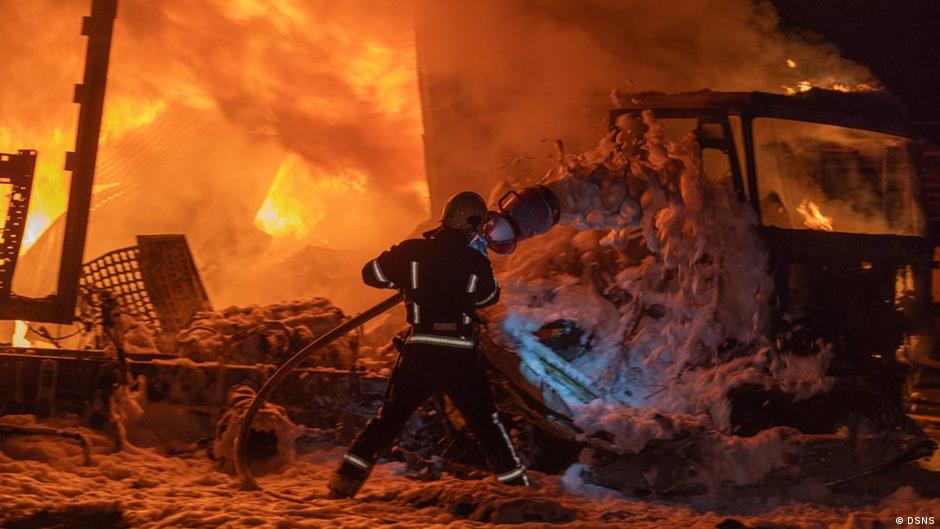
Russian forces struck two Ukrainian regional centers on Wednesday, September 9, killing civilians and damaging infrastructure that is both socially and economically significant. In Sumy, a strike hit a parking area near the Manufaktura shopping center, killing two young people and injuring about 20 others. In Mykolaiv, a day of attacks damaged port infrastructure, warehouses, a post office and civilian facilities, leaving two people dead and at least 12 wounded.
The immediate human toll was severe. Oleg Grigorov, head of the Sumy regional military administration, said the two confirmed dead in Sumy were a 21-year-old man and a 21-year-old woman. Preliminary information indicated that about 20 people were injured. Two men and one woman were reported to be in serious condition, while another Sumy resident was in extremely serious condition. Teenagers were among those hurt.
Emergency crews and municipal services worked at the scene after the strike. The Sumy regional administration said the threat of further attacks in the region remained in place, a warning that points to a wider pattern of disruption beyond the first explosion. In economic terms, repeated threats force cities to keep emergency services mobilized, interrupt commerce and increase the cost of basic municipal operations even when a second strike does not occur.
Urban Targets and the Cost of Disruption
The attack near a shopping center parking lot is not only a civilian tragedy. It also highlights the vulnerability of everyday economic spaces in wartime. Retail centers, parking areas and nearby transport routes are part of a city’s normal commercial circulation. When such areas are hit, the consequences extend from casualties and property damage to reduced foot traffic, lost working hours, higher insurance and repair costs, and the psychological erosion of consumer activity.
For cities such as Sumy, located in northeastern Ukraine and repeatedly exposed to security risks, the cost is cumulative. Businesses must weigh whether to remain open, households adjust routines around air alerts, and local authorities divert scarce resources toward emergency response. These are not abstract macroeconomic effects. They appear in postponed purchases, disrupted shifts, pressure on hospitals and additional demands on utilities and public transport.
Local authorities in Sumy said the region continued to face the threat of repeated attacks after the strike near the Manufaktura shopping center.
That warning matters because modern urban economies depend on predictability. A single strike may destroy assets; the possibility of repeated strikes changes behavior. Shops close earlier, logistics operators reroute deliveries, employees may be unable to travel safely, and families reduce movement around public spaces. The result is a form of economic friction that compounds over time, especially in regional cities with fewer buffers than national capitals.
Mykolaiv’s Port Infrastructure Under Pressure
Mykolaiv faced a parallel assault with a different economic profile. Russian forces continued strikes on the city throughout September 9, according to regional authorities. Georgiy Reshetilov, head of the Mykolaiv regional military administration, said port infrastructure was damaged during the day’s attacks. Two people were killed and at least 12 were injured, including a one-year-old child.
The State Emergency Service of Ukraine said some Russian strikes hit warehouse premises where vegetables were stored, as well as a post office. These details are important for understanding the structural impact. Ports, warehouses and postal facilities are nodes in broader economic systems. Damage to them can slow the movement of goods, interrupt local food distribution, raise storage losses and weaken the ordinary networks through which households and businesses receive supplies.
Mykolaiv has long held strategic and economic importance because of its position in southern Ukraine and its connection to maritime and river logistics. Attacks on port facilities therefore have implications beyond the city itself. Even when the full scale of damage is not specified, strikes on such infrastructure can affect export capacity, domestic supply chains and the reliability of routes that businesses use to plan deliveries.
The strikes also followed a heavy overnight attack on the region. During the night of September 9, Russia had already launched a large-scale assault using drones and ballistic missiles. Ukrainian authorities reported damage to port and civilian infrastructure, as well as residential buildings. At that stage, officials reported one woman killed and four people injured.
The sequence is economically significant: an overnight mass attack followed by strikes throughout the day creates layered disruption. Emergency response, damage assessment, repair work and renewed alerts overlap. In sectors such as logistics and food storage, delays can quickly translate into losses, particularly where perishable goods are involved. The reported strike on warehouses containing vegetables illustrates how wartime damage can pass from infrastructure into prices, availability and local market stability.
Historical Parallels and Structural Consequences
Wars often reshape economies not only through battlefield losses but through sustained pressure on civilian systems. Historical parallels can be seen in conflicts where attacks on transport hubs, warehouses and urban commercial districts weakened the capacity of local economies to function normally. The effect is rarely limited to destroyed buildings. It includes uncertainty, underinvestment, labor displacement and the reallocation of public spending from development to repair and emergency response.
In Ukraine’s case, repeated attacks on cities such as Sumy and Mykolaiv reinforce a wartime economic geography in which some regions face persistent penalties. Businesses operating in exposed areas confront higher risks than firms elsewhere. Local governments must maintain readiness for rescue operations and infrastructure repair. Households bear the hidden costs of insecurity through lost income, medical expenses, relocation decisions and reduced access to services.
The attacks described by Ukrainian officials also show how civilian and economic infrastructure can be intertwined. A shopping center parking lot, a post office, vegetable warehouses, residential buildings and port facilities serve different functions, but together they form the daily operating system of a regional economy. Damage to one part can be absorbed; repeated damage across several parts weakens resilience.
The confirmed facts from September 9 point to two immediate outcomes: deaths and injuries among civilians, and further damage to infrastructure essential for commerce and logistics. The broader consequence is a continuation of economic attrition. For Sumy, that means pressure on urban life and local services. For Mykolaiv, it means renewed stress on port-related infrastructure and supply chains. For Ukraine as a whole, it adds to the long-term cost of defending economic continuity under attack.