Serbia Hosts First Joint Military Exercises with NATO Amid Complex Geopolitical Balancing
Serbia conducts inaugural joint NATO-Serbia military drills under Partnership for Peace, maintaining its military neutrality while deepening limited cooperation.
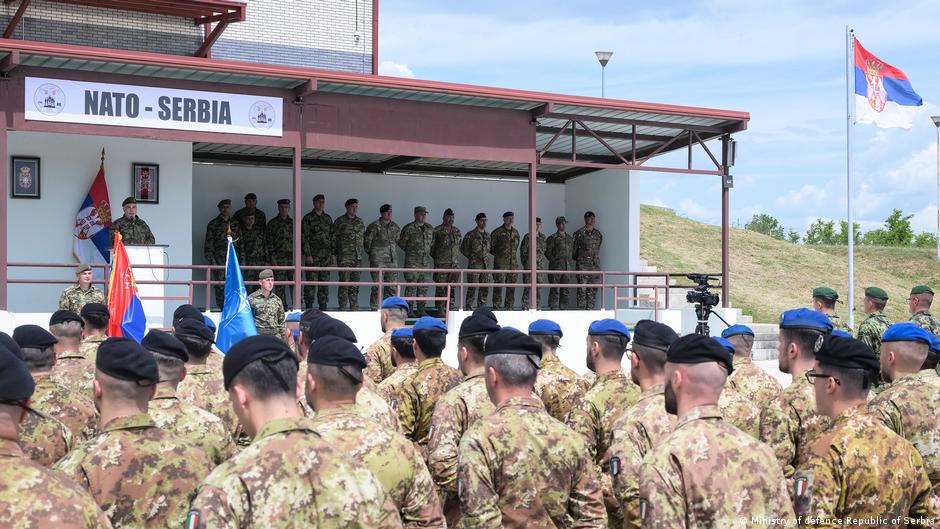
In a historic development, Serbia is hosting its first-ever joint military exercises with NATO forces, marking a significant milestone in Belgrade's complex relationship with the North Atlantic alliance. The drills, titled "NATO - Serbia," are held under the framework of NATO's Partnership for Peace program and involve approximately 600 troops from Serbia, Italy, Romania, Turkey, along with observers from Germany and other NATO countries.
Context and Historical Background
The joint exercises are taking place from May 12 to May 23 at the Borovac training ground near the central Serbian town of Bujanovac. This event is remarkable given Serbia's historical stance and regional dynamics. Since the 1999 NATO air campaign during the Kosovo conflict, relations between Belgrade and NATO have been fraught with tension. Serbia has maintained a policy of military neutrality, distinguishing itself from many of its Balkan neighbors who have pursued NATO membership.
Despite this, Serbia has been a member of NATO's Partnership for Peace program for nearly two decades, engaging periodically in joint exercises and military cooperation. This status allows Serbia to balance its strategic interests, preserving sovereignty without fully aligning militarily with NATO. At the same time, Serbia continues to nurture close diplomatic and military ties with Russia, adding another layer of complexity to its foreign and security policy.
"These exercises are important. Serbia is the host country, and they are conducted in full compliance with Serbia's policy of military neutrality," a NATO representative noted.
Implications for Regional Security and Economic Stability
The joint NATO-Serbia drills symbolize a cautious yet notable shift in Serbia’s defense posture amidst evolving regional security challenges. The presence of multinational NATO contingents operating alongside Serbian forces reflects a pragmatic approach towards interoperability and confidence-building in a historically volatile region.
From an economic perspective, improved military cooperation with NATO could influence Serbia's broader economic integration with Euro-Atlantic institutions. While Serbia is not a NATO member, closer ties may facilitate increased foreign investment and infrastructure development linked to defense and dual-use technologies. However, this must be balanced against potential economic repercussions stemming from Russia's role as a key energy supplier and strategic partner to Serbia.
Furthermore, the ongoing NATO-led peacekeeping mission in Kosovo (KFOR) underscores the unresolved tensions in the region. Serbia’s non-recognition of Kosovo’s independence continues to be a diplomatic sticking point, affecting political stability and economic prospects both domestically and in the Western Balkans.
Structural Economic Consequences and Future Outlook
Serbia’s military neutrality coupled with selective engagement through Partnership for Peace provides a framework for maintaining autonomy while accessing strategic benefits. The joint exercises may serve as a foundation for deepening interoperability and crisis response capabilities, potentially attracting increased NATO-related funding, training, and technology transfers.
This dual-track approach also reflects Serbia’s broader economic strategy of balancing East-West relations. With the European Union as a key trading partner and Russia as a critical energy supplier, Serbia’s nuanced foreign policy enables it to navigate competing geopolitical pressures while pursuing economic modernization.
In the long term, successful military cooperation with NATO might bolster Serbia's credibility as a stable regional actor, which could have positive spillover effects on investment and economic growth. Yet, this is contingent on managing diplomatic sensitivities and ensuring that economic dependencies do not compromise strategic autonomy.
Overall, the NATO-Serbia joint exercises represent more than a military event; they are a barometer of Serbia’s evolving role in the Balkans and its complex economic and security calculus amid competing global influences.