United Russia Heads for Constitutional Majority in State Duma Vote
Partial results show the ruling party expanding its parliamentary dominance, reinforcing the political foundations of Russia’s wartime economy.
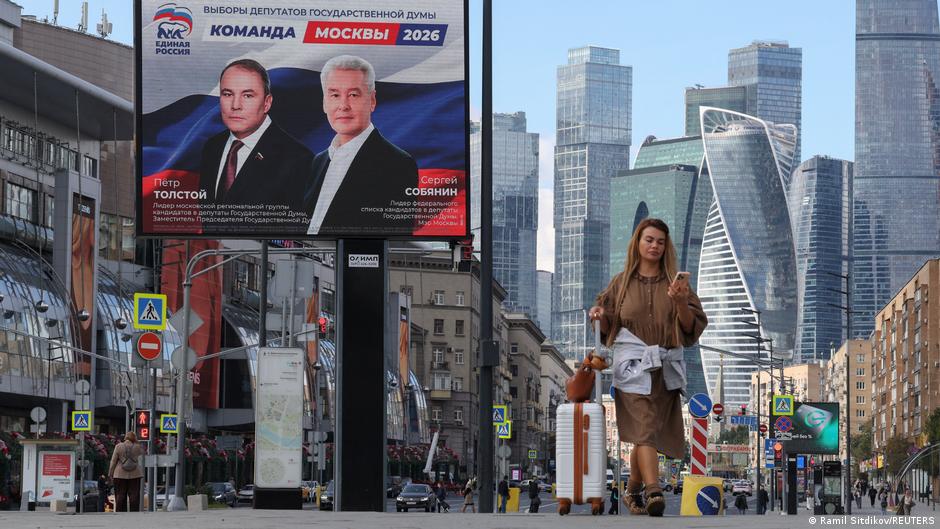
Russia’s ruling party, United Russia, is on course to win the election to the ninth State Duma, according to partial results released by the Central Election Commission in the early hours of Monday, September 21. After 82.19 percent of protocols had been processed, the party was credited with 57.76 percent of the vote, a result that would mark a significant increase from its 49.82 percent showing in the 2021 Duma election.
The Communist Party of the Russian Federation was in second place with 13.89 percent, followed by the Liberal Democratic Party of Russia with 8.77 percent. The New People party stood at 7.97 percent, while A Just Russia had 4.99 percent, leaving it at risk of failing to clear the five percent threshold required for party-list representation in parliament, according to the commission’s data cited by TASS.
United Russia candidates were also leading in 208 of the 225 single-mandate districts. If those leads hold, the party of power would receive more than the 301 seats needed for a constitutional majority in the lower house of parliament. That threshold is politically important because it allows the ruling bloc to approve constitutional legislation without relying on other factions.
After 82.19 percent of protocols were processed, United Russia had 57.76 percent of the vote, according to the Central Election Commission.
A Larger Mandate for a Centralized Economic Model
For Russia’s economy, the projected result matters less as a conventional electoral shift than as a signal of institutional consolidation. A larger parliamentary majority for United Russia would strengthen the legislative base behind the state’s existing economic course: high centralization, expanding public control over strategic sectors, and continued prioritization of defense and security spending.
The structure of the result is also notable. Party-list support above 57 percent, combined with dominance in single-mandate districts, points to a parliament in which the ruling party can shape budgets, taxation, industrial policy and regulatory frameworks with limited formal resistance. In practical terms, that reduces the likelihood of parliamentary constraints on wartime fiscal priorities or on measures designed to redirect resources toward state-defined strategic needs.
Russia has already moved further from a liberal market model since the start of the full-scale war against Ukraine. Sanctions, capital controls, import substitution policies and heavier state involvement in industry have made the budget and state-linked corporations central drivers of economic activity. A reinforced United Russia majority would not create that model, but it would help lock it in politically.
Historical Parallels and Political Economy
The election result fits a longer Russian pattern in which parliamentary institutions tend to consolidate around the executive during periods framed by the state as security crises. In such settings, economic policy is often presented not primarily as a matter of efficiency or competition, but as an instrument of sovereignty, mobilization and political stability.
That has structural consequences. When a ruling party controls a constitutional majority, debate over economic trade-offs can move away from parliament and into the executive bureaucracy, presidential administration and state corporate sector. The legislature remains important, but more as a mechanism for converting executive priorities into law than as an arena for open contestation over fiscal and industrial strategy.
For investors, households and regional authorities, this can produce predictability of a particular kind. Policy direction becomes easier to anticipate because the ruling bloc faces few institutional obstacles. At the same time, the absence of meaningful parliamentary competition can weaken feedback mechanisms, making it harder for alternative assessments of inflation, productivity, labor shortages or regional stress to shape policy before problems become acute.
Occupied Territories and International Criticism
This election also took place across three days and was held on Ukrainian territories occupied by Russia. That element adds a significant international dimension to the vote, particularly because Western governments have treated elections organized in occupied areas as lacking legitimacy.
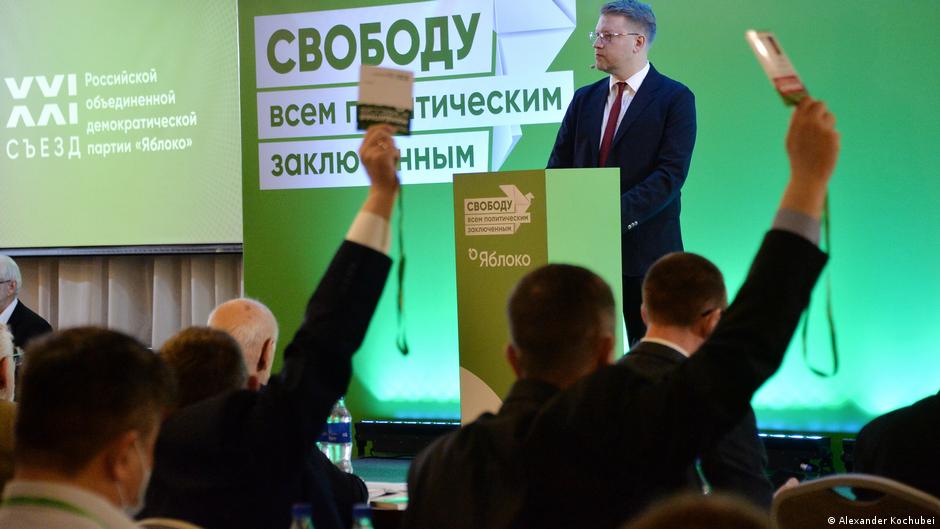
The only major party that had opposed the war, Yabloko, was removed from the election. Germany and the European Union criticized the Russian parliamentary vote, pointing to what they described as its staged character and to repression against the opposition. Those criticisms underscore the widening gap between Russia’s domestic institutional narrative and the assessment of many European governments.
Economically, this divide is not symbolic alone. The conduct of elections in occupied territories, combined with continued repression of anti-war political forces, reinforces the political conditions behind Russia’s confrontation with the European Union. That confrontation has already reshaped trade flows, energy relations, financial access and investment patterns. A parliament dominated by United Russia is likely to support continuity rather than recalibration in that framework.
What the Numbers Imply
The Central Election Commission’s partial count does not merely show United Russia ahead; it points toward a legislature with an even stronger ruling-party center than before. The comparison with 2021 is central: an increase from 49.82 percent to 57.76 percent on the party list, if reflected in final results, would give the Kremlin-aligned party a broader electoral claim at a time when Russia’s economy is under heavy pressure from war costs, sanctions and demographic strain.
The immediate policy consequences may be incremental rather than dramatic. Russia’s strategic economic direction is already set by the executive. But parliamentary arithmetic affects how easily that direction can be codified, extended and insulated from challenge. A constitutional majority gives the ruling party the votes needed to support far-reaching legal changes, including those with long-term implications for property rights, regional finance, public spending and the balance between civilian and military priorities.
In that sense, the Duma election is best understood as part of the institutional architecture of Russia’s wartime political economy. The vote strengthens the party that has served as the main legislative vehicle for the Kremlin’s agenda. It also narrows the space for organized opposition at precisely the moment when the economic costs of prolonged confrontation are becoming more structural.
The final seat distribution will depend on completed counts, including the single-mandate races. But on the figures released after 82.19 percent of protocols were processed, United Russia appears positioned not only to win, but to govern the lower house with the kind of majority that can shape Russia’s economic trajectory for years.