German Poll Reveals Russia Fears but Deep Divisions Over Energy Ties
Security concerns unite much of Germany, yet political, regional and generational divides complicate the economic response to Russia.
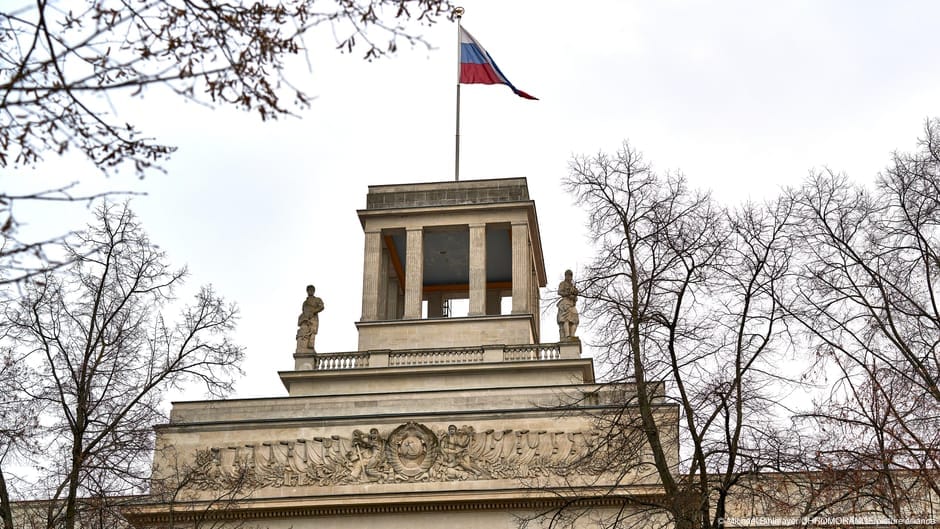
More than 60% of Germans regard Russia as a threat to their country, according to a new Ipsos survey that highlights how security fears are reshaping Germany’s political and economic debate. Only 24% of respondents rejected that assessment, but views differed sharply by party affiliation, geography, age and gender.
Der Spiegel reported the findings on Monday, November 16. Ipsos surveyed 2,019 German citizens eligible to vote between November 5 and November 8. The poll’s statistical margin of error is up to 2.2 percentage points.
The results point to a broad security consensus among supporters of Germany’s established governing parties. More than 80% of voters aligned with the conservative Christian Democratic Union and Christian Social Union bloc, the Social Democratic Party, and Alliance 90/The Greens described Russia as a threat. The same view was held by 54% of respondents who had voted for the Left Party.
The pattern was reversed among supporters of the far-right Alternative for Germany, or AfD. Only 26% of AfD voters said Russia posed a danger to Germany. Some 39% said they completely disagreed with that proposition, while another 21% said they tended to disagree. A similar distribution appeared among voters for the left-populist BSW, the Alliance for Social Justice and a Reasonable Economy founded by Sahra Wagenknecht.
Security Consensus Meets an Energy Divide
The economic significance of the poll lies in the gap between public perceptions of Russia as a security risk and attitudes toward restoring commercial relations. Germans were almost evenly divided over a possible resumption of Russian oil and gas supplies: 44% opposed the idea, 42% supported it and 14% remained undecided.
That near-even split exposes a central policy tension. Security judgments may encourage Germany to maintain distance from Russian energy, while a substantial part of the electorate remains open to renewed supplies. For policymakers, the figures suggest that decisions affecting energy sourcing, industrial costs and household budgets will continue to encounter resistance from voters who distinguish between geopolitical risk and economic exchange.
The survey reveals no simple return to Germany’s former energy model: threat perceptions are widespread, but support for Russian oil and gas has not disappeared.
Germany’s political divide is reinforced by a regional one. In the country’s western regions, 65% of respondents considered Russia a threat regardless of political preference. In eastern Germany, the share was 53%. This 12-point gap matters economically because national energy and security policy must be implemented across regions whose voters assess the costs and risks differently.
The findings also complicate assumptions about the reach of pro-Russian political narratives. Both the AfD and BSW are known for such messaging, yet nearly 40% of their supporters agreed that Russia bears responsibility for the war against Ukraine. Across the full sample, 55% completely agreed with that statement and a further 18% tended to agree.
In other words, disagreement over policy does not necessarily imply disagreement over responsibility. Even within parties where relatively few voters see Russia as a direct danger to Germany, a substantial minority attributes responsibility for the war to Moscow. That distinction could influence debates over sanctions, energy imports and the financial burden of strengthening national and allied security.
War Anxiety and Its Structural Consequences
German intelligence services have warned in recent months that Russia could test NATO’s resolve and cohesion by conducting limited operations on alliance territory by 2030. Against that background, reports that war between Russia and Germany could begin within the next four years caused concern among 43% of those surveyed.
The anxiety was not evenly distributed. Half of female respondents expressed concern, compared with 37% of men. The generational difference was larger still: 54% of people aged 18 to 29 said they feared such a war, while only 35% of those aged 60 to 75 reported the same concern.
This age profile has potential long-term significance. Younger adults will live longest with the fiscal and labor-market consequences of decisions taken in response to heightened security risks. Their greater concern may translate into stronger support for protective measures, but it may also intensify scrutiny of how defense, energy and social spending are balanced.
The broader economic message is one of fragmentation rather than a settled national strategy. A majority sees Russia as a threat, and an even larger share assigns it responsibility for the war in Ukraine. Yet the public remains divided almost equally over restoring Russian energy supplies, while eastern and western regions and different political camps perceive the underlying danger differently.
Germany therefore faces a structural policy problem: security, energy affordability and political cohesion cannot be treated as separate questions. Measures intended to reduce strategic exposure can carry economic costs, while attempts to ease those costs through renewed trade could clash with the majority’s assessment of Russia. The poll does not resolve that conflict, but it shows clearly where the pressure points lie.