Germany Announces Record Defense Spending Within NATO Amid Growing Alliance Commitments
Germany plans unprecedented 124.7 billion euros defense budget in 2026, marking significant shift in NATO’s European military spending landscape.
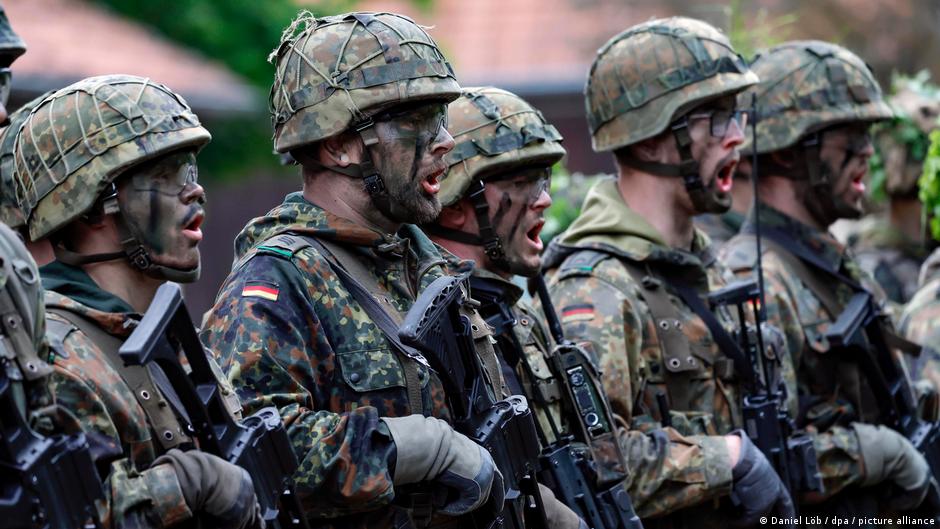
Germany has declared a landmark increase in its defense budget, projecting expenditures of 124.7 billion euros for 2026, according to data released by NATO ahead of its summit in Ankara. This represents a 25.5% rise compared to the previous year’s spending of approximately 99.3 billion euros, marking the largest annual increase Germany has recorded within the alliance.
In absolute terms, the increase of 25.4 billion euros is the highest growth in German defense spending ever documented under NATO. Only the United States surpasses Germany in defense outlays among alliance members, underscoring Germany’s evolving role in European security dynamics.
Context and Economic Implications of Germany's Defense Spending Surge
With Germany's defense budget expected to reach 2.69% of its gross domestic product (GDP) in 2026, up from 2.22% in 2025, the country is responding to both internal and external pressures to enhance military capabilities. NATO Secretary General Jens Stoltenberg highlighted that European members and Canada have collectively increased their defense spending by nearly 20% year-on-year, equating to an additional $139 billion. Over 2025 and 2026 combined, this increase is projected to hit $258 billion.
"Only last year, European allies and Canada spent nearly 20 percent more on defense than the year before," said Stoltenberg, emphasizing the alliance's collective effort to meet defense commitments.
This intensified financial commitment contrasts with earlier criticisms from the U.S. administration under President Donald Trump, who disparaged European defense investments as inadequate. German Chancellor Olaf Scholz and NATO officials have rejected such characterizations, framing the spending surge as a necessary response to shifting geopolitical realities, including heightened tensions in Eastern Europe and the Middle East.
Germany’s ambitious financial plans include borrowing over 800 billion euros by 2030, with government bond issuances expected to exceed 200 billion euros in 2027 alone—a 12.5% increase from 2026. These funds will primarily bolster the defense budget, which is forecasted to grow to 183.6 billion euros by 2030, comprising roughly one-third of the national budget. This signals a structural shift in German fiscal priorities, reflecting broader European security imperatives.
Despite this increase, European NATO members still lag behind the United States, which is projected to invest around $850.2 billion (approximately 745 billion euros) in defense in 2026, significantly surpassing the combined European and Canadian expenditure estimated at 556 billion euros. Globally, the U.S. maintains its position as the foremost military spender, ahead of China and Russia. Germany ranks fourth internationally in defense spending.
Not all NATO members are keeping pace with these escalations. Five countries—Greece, Poland, Latvia, Lithuania, and Estonia—are expected to meet or exceed NATO’s recommended defense spending benchmark of 5% of GDP this year. Meanwhile, the alliance has set a target for all members to allocate at least 3.5% of their GDP to defense by 2035, supplemented by an additional 1.5% for related expenditures.
However, several NATO members, including Belgium, Spain, and the Czech Republic, are projected to maintain defense spending at around 2% of GDP in 2026, well below alliance expectations. Slovenia is forecasted to fall below the 2% threshold, a commitment NATO members pledged to meet by the end of 2024. These disparities highlight ongoing challenges in burden-sharing and collective defense commitments within the alliance.
Germany’s significant increase in defense spending not only reflects its response to geopolitical pressures but also signals a pivotal transformation in European security policy and economic allocation. The substantial borrowing plans and the corresponding budgetary shifts underscore the intersection of economic strategy and defense imperatives. Analysts note that this reallocation may have broad implications for Germany’s fiscal health and the wider European economic landscape, especially as defense expenditures begin to command an increasingly large share of national budgets.