U.S.-Denmark Greenland Deal Signals New Arctic Security Economy
Washington’s planned expansion of its Greenland presence links military control, alliance burden-sharing and strategic access to Arctic resources.
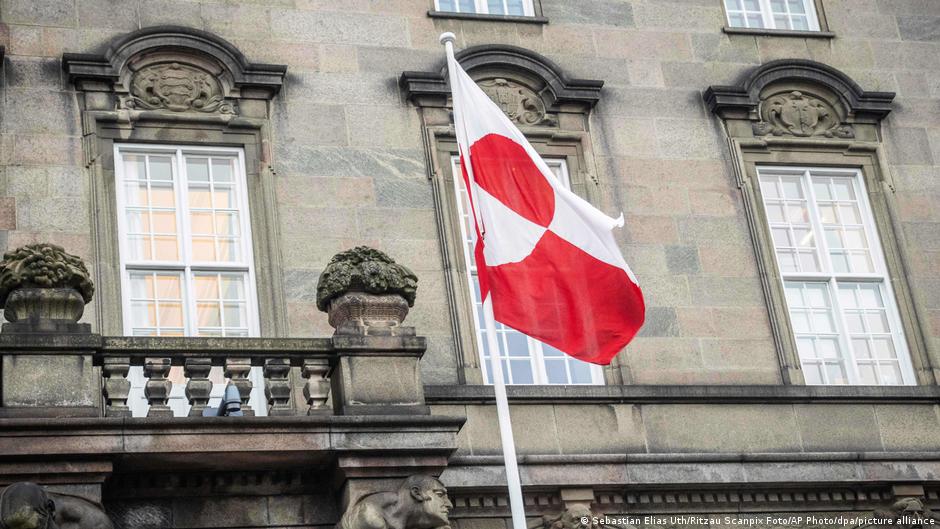
The United States has reached understandings with Denmark and Greenland to expand its military presence on the island, President Donald Trump said, while the governments in Copenhagen and Nuuk confirmed progress but described the arrangement as an expected agreement rather than a concluded deal.
Trump announced the deal on Friday evening, September 18, writing on Truth Social that the parties had agreed on the “security of Greenland.” According to the U.S. president, the arrangement would give Washington “permanent control over security and all other needs in Greenland.” He said the United States had obtained an indefinite right to “do everything necessary in Greenland to ensure and protect the security” of both the island and the United States.
The reported terms, as described by Trump, would also restrict the ability of “opponents of the United States” to establish military bases in Greenland or make “sensitive investments” in the autonomous Danish territory without U.S. approval. Trump said the deal would cost the United States nothing.
He added that Washington would immediately begin expanding its military presence in several parts of Greenland. Trump also praised himself for reaching an agreement that, in his telling, his predecessors had been unable to secure for 100 years, saying its results would be “highly valued by the American people.”
Security Guarantees as Economic Infrastructure
For an economics-focused readership, the significance of the Greenland announcement lies not only in military geography but in the political economy of the Arctic. Security guarantees in remote strategic regions often become the scaffolding for infrastructure, investment screening, logistics networks and resource policy. In Greenland’s case, the language cited by Trump extends beyond bases and patrols. It reaches into “sensitive investments,” implying that capital flows into the territory may become part of a broader U.S.-led security perimeter.
That framing matters because Greenland occupies a rare position in the global economy. It is part of the Kingdom of Denmark, located off the coast of North America, and increasingly central to debates over Arctic sea routes, military mobility and access to critical minerals. Trump has repeatedly justified his interest in the island on security grounds. Yet officials close to him have also noted that Greenland is rich in rare earth resources, a fact that places the island within the wider contest over supply chains needed for advanced manufacturing, defense systems and the energy transition.
The governments in Copenhagen and Nuuk welcomed the understandings with Washington, presenting them as supportive of NATO. Danish Prime Minister Mette Frederiksen said the agreement would strengthen “our common security in the Arctic and in the North Atlantic region.”
“The agreement ensures and strengthens the security of Greenland, the Kingdom of Denmark, the United States and the Western alliance,” Greenland Prime Minister Jens-Frederik Nielsen said.
At the same time, the joint statement from Copenhagen and Nuuk stressed that the understandings recognize Denmark’s “sovereignty and territorial integrity” and the “right of the people of Greenland to self-determination.” Nielsen added that the arrangement recognizes Greenland’s interests and the autonomous region’s place in international cooperation.
A Deal Announced Before It Is Final
There is a notable caveat. The statement issued by Nuuk and Copenhagen was titled as a press release concerning an “expected agreement” with the United States. That wording may indicate that the documents themselves have not yet been signed. Under Trump, negotiations between foreign governments and Washington have repeatedly collapsed at the last moment, after which the White House was accused of trying to alter deal terms “at the last minute.”
That uncertainty is economically relevant. For investors, defense contractors and governments, the difference between a political announcement and a signed agreement can be substantial. Arctic projects require long planning horizons, high capital expenditure and reliable jurisdictional rules. A deal that changes Greenland’s security governance, investment screening or military infrastructure could reshape the island’s economic options, but only once the legal and diplomatic architecture is clear.
U.S. Secretary of State Marco Rubio, speaking to Fox News Digital, called the Greenland deal a “huge victory” for the United States and Americans. He said the agreement “forever guarantees U.S. security interests in the Arctic at no cost to American taxpayers.”
Rubio suggested the deal was enabled by Denmark and Greenland’s assessment of their own defense capacity. “Denmark and Greenland understand that they do not have the necessary financial resources to defend Greenland in the event of an attack or threat. The United States has the necessary resources for this,” Fox News quoted him as saying.
Burden-Sharing and the Price of Protection
Rubio’s comments point to a familiar alliance bargain: smaller territories or states accept a larger power’s security role because they lack the fiscal capacity to provide equivalent defense on their own. Historically, such arrangements have rarely been cost-free in a broader sense, even when no direct payment is involved. They can shift decision-making authority, alter investment permissions and redefine which economic activities are treated as strategic rather than commercial.
For Denmark and Greenland, the bargain may provide stronger deterrence in an increasingly contested Arctic. For the United States, it may lock in a strategic position at the top of the Atlantic system without a formal purchase or sovereignty transfer. For NATO, it could reinforce the alliance’s northern flank. But for Greenland, the long-term consequence may be a more constrained development model in which foreign investment, mining and infrastructure are judged through the lens of U.S. security approval.
The announcement could mark the end of Trump’s years-long claims to control over Greenland. During his first term, he spoke of wanting to buy the island. After returning to the White House, he increased pressure on Denmark and its European allies, even threatening them with huge customs tariffs. The current arrangement, if completed, would not amount to a purchase, but it may achieve part of the same strategic objective: durable U.S. leverage over Greenland’s security environment and, potentially, over the economic choices tied to that environment.
In that sense, the Greenland deal sits at the intersection of old strategic geography and new industrial policy. The Arctic is becoming a theater where defense commitments, mineral access, infrastructure finance and alliance politics are increasingly inseparable. Whether the agreement is finalized on the terms described will determine whether Friday’s announcement becomes a durable shift in Arctic economic governance or another high-profile negotiation vulnerable to last-minute revision.